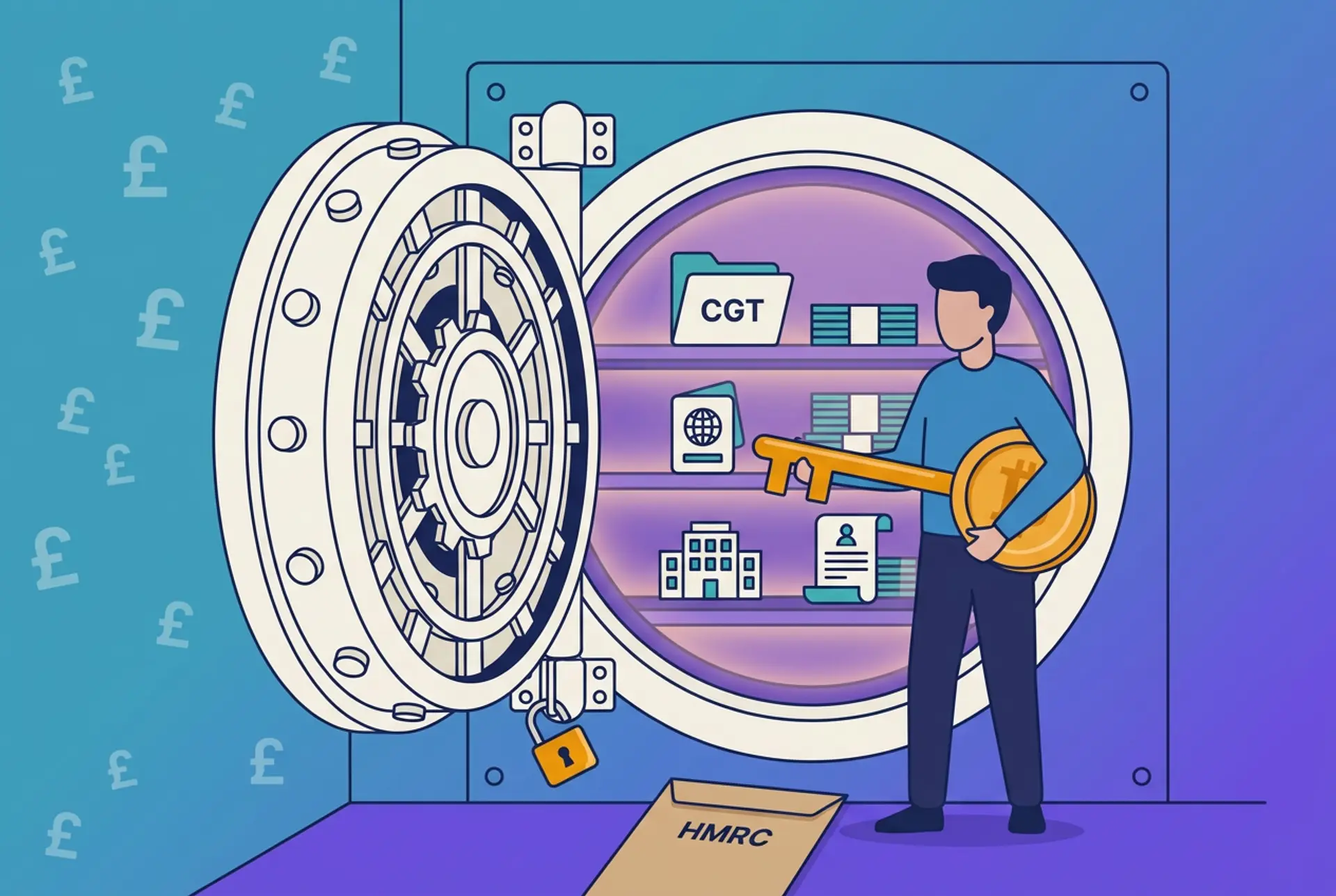

Many UK accountancy firms still view crypto as a niche specialism. Something separate. Something “other”. Something affecting only a small number of highly active investors.
Increasingly, other firms are taking a different path and making interesting discoveries.
The question is no longer simply whether firms have crypto clients. Most already do. Just how many is explored in our other article “How many crypto clients do I really have…”
Another key question right now is whether firms fully understand the commercial, operational and strategic implications of that reality. Because crypto clients often matter far more than firms initially realise.
Crypto Clients Are Often Disproportionately Valuable
One of the biggest misconceptions surrounding crypto is that it primarily concerns speculative retail traders. In practice, many crypto holders are also:
- business owners
- entrepreneurs
- technology professionals
- senior employees
- internationally mobile individuals
- financially engaged younger clients
- early adopters of new financial products
These clients are frequently more engaged with their finances than average clients. They often require broader advisory support across:
- Capital Gains Tax
- disclosure
- residency
- corporate structuring
- inheritance planning
- employment-related securities
- International tax considerations
- record keeping and governance
For firms, this means crypto exposure can correlate with clients who are commercially valuable well beyond crypto itself, extending into service lines and revenue streams already established within the firm.
From a practice leadership respective, the issue is not merely the number of crypto clients within a practice. It is the aggregation of future lifetime advisory value across all service lines unlocked by the crypto client.
Firms Risk Losing Digitally Sophisticated Clients
A growing number of younger and digitally native clients now assume their accountant can handle cryptoasset matters competently. To many clients, crypto no longer feels unusual. Buying Bitcoin through an app, experimenting with staking, or holding assets on an exchange may feel no more remarkable than opening a stocks and shares ISA. This all too often manifests in an information asymmetry between the client and the advisor, with the gradient going the wrong way.
As a result, clients can become frustrated when firms:
- appear uncomfortable discussing crypto, or don’t yet understand the terminology
- Immediately refer work elsewhere
- rely heavily on spreadsheets and manual processes
- dismiss crypto as insignificant
- lack clear internal processes or confidence in their work around their client's digital asset activity
In some cases, clients simply stop disclosing activity altogether. In others, they move to firms perceived as more technologically capable.
How to transition to confidence?
Importantly, firms do not necessarily need to become “crypto specialists” to retain these clients. However, they do need to evidence a credible process, defensible workflows. They also need the ability to engage confidently with digital asset issues when they arise.
Crypto Capability Is Becoming a Proxy for Digital Capability
This is perhaps the most overlooked shift of all. Increasingly, clients interpret a firm’s ability to deal with crypto as a broader signal of:
- keeping up with global trends - demonstrating energy and vitality
- technical competence
- adaptability
- operational maturity
- modern tooling
- future readiness
In other words, these clients are not merely assessing whether a firm understands Bitcoin. They are assessing whether the firm feels equipped for a rapidly digitising financial environment. This matters because the next generation of financial complexity may not arrive labelled purely as “crypto”.
Firms are already seeing increasing overlap between digital assets and:
- fintech platforms
- online investment ecosystems
- tokenised assets
- international payment systems
- creator economies
- AI-enabled commerce
- digitally native businesses
Firms that build confidence handling crypto today may therefore position themselves more strongly for wider digital advisory opportunities tomorrow.
HMRC Expectations Continue To Evolve
At the same time, HMRC scrutiny of cryptoasset activity continues to mature. What was once treated as a relatively niche area is increasingly becoming part of mainstream compliance expectations. HMRC enquiries now commonly involve detailed requests relating to:
- exchange histories
- wallet activity
- staking rewards
- airdrops and forks
- software calculations
- valuation methodology
- and historic transaction reconstruction
For some time, the common thinking seemed to suggest that a plausible tax position was sufficient. In September 2026, HMRC published its Guidelines for Compliance (13) https://www.gov.uk/government/publications/help-ensuring-documents-filed-with-hmrc-are-correct-and-complete-gfc13
It follows, that crypto tax calculations need to be explainable, evidenced and defensible. This creates pressure not only on technical tax capability and analysis, but also on operational process and data management inside firms themselves and their systems. For many practices, the challenge is no longer simply understanding the tax rules. It is ensuring the firm has appropriate systems and workflows to manage increasingly complex digital financial data accurately and consistently, that tolerates a higher level of scrutiny.
Privacy Is Becoming Commercially Important
One area that remains significantly underestimated across the profession is privacy. Many crypto holders are highly sensitive about:
- wallet visibility
- exchange account exposure
- transaction histories
- personal security
- how their financial data is stored and shared
For these clients, privacy is not merely a preference. It is often part of their personal security model. Increasingly, crypto capability is not being judged on tax accuracy alone. Clients are also assessing how professional firms handle sensitive digital financial information. These clients require that their advisors and their systems can evidence:
- controlled data access
- secure handling processes
- privacy-conscious tooling
- strong operational governance
Firms that allay their clients’ concerns on these grounds may achieve materially better client engagement and disclosure outcomes. This is becoming an important trust signal within the market.
Final Thought
Many firms still view crypto as a specialist edge case. Yet for an increasing number of practices, crypto is quietly becoming a normal part of the client landscape. The firms best positioned for the next phase of digital finance may not necessarily be the firms with the deepest crypto expertise. They may simply be the firms that recognised early that crypto was never really just about crypto.