Free UK Crypto Tax Calculator
Sell, swap, spend, or gift crypto? That’s usually a disposal for UK tax and may trigger Capital Gains Tax. Enter one disposal below to see what you owe and how it was worked out.
Your disposal
What you bought
Your Section 104 pool and its average cost
What you disposed of
Selling, swapping, spending or gifting all count
Your income
Sets your rate: 18% or 24%
Estimated Capital Gains Tax
£5,911.80
on a gain of £32,700.00 · you keep £26,788.20
- Tax free £3,000
- 18% on £20,270
- 24% on £9,430
That is one disposal. Recap works out every trade, swap and wallet for the whole tax year.
HMRC makes you pool every unit of a coin you hold and use one blended cost. That pool is the Section 104 holding.
£20,270 of your basic rate band is left after £30,000 of income. Report on form SA108 with your Self Assessment.
How UK crypto tax is worked out
Selling is not the only thing HMRC treats as a disposal. Swapping one token for another, spending crypto on something, and giving it away to anyone other than your spouse or civil partner all count too. Every unit of a coin you own sits in one Section 104 pool with a single blended cost, and each disposal takes its share of that cost out of the pool. Your gain is what you got for the units, minus what they cost you.
Here is the disposal the calculator above opens with. You hold 0.75 BTC that cost you an average of £34,800 a coin, you dispose of all 0.75 at £78,400, and you earn a salary of £30,000. For the 2025–26 tax year it works out like this.
- Proceeds: 0.75 × £78,400 = £58,800.
- Cost taken from the pool: 0.75 × £34,800 = £26,100.
- Gain: £58,800 − £26,100 = £32,700.
- The annual exempt amount covers £3,000 of that tax free, leaving £29,700 taxable.
- Your salary uses £17,430 of the £37,700 basic rate band once the £12,570 personal allowance is taken off, so £20,270 of the band is still free. That slice is taxed at 18%: £3,648.60.
- The remaining £9,430 sits above the band and is taxed at 24%: £2,263.20.
- Capital Gains Tax due: £5,911.80. You keep £26,788.20 of the gain.
Not every crypto gain is a capital gain. Staking and mining rewards, airdrops you did something to earn, and crypto paid to you by an employer are income when you receive them, taxed at your income tax rate — and the value you received becomes their cost in your pool. Our UK crypto tax guide sets out which activity falls on which side.
When and how to report
Capital gains go on the SA108 pages of a Self Assessment return. For the 2025–26 tax year the deadline to file and pay is 31 January 2027, and if you have never filed before you need to register by 5 October 2026. You can also report a gain sooner through HMRC’s real-time Capital Gains Tax service, which gives you a payment reference straight away. Our step-by-step filing guide covers both routes.
The 30-day and same-day rules
Pooling has two exceptions, and they exist to stop people selling to bank a loss and buying straight back. If you buy the same coin on the same day you sell it, the disposal is matched against that day’s purchase first. If you buy it back within the next 30 days, the disposal is matched against that purchase instead. Only what is left over comes out of your Section 104 pool — so a quick repurchase will not hand you the loss you were expecting.
Can HMRC see your crypto?
Yes, and in more detail every year. UK exchanges already hand over customer data when HMRC asks for it, and HMRC has written to holders it believes have under-reported. From 1 January 2026 the Cryptoasset Reporting Framework obliges crypto platforms to collect your tax residence and National Insurance number and report your transactions to HMRC annually, with the first exchange of that data in 2027. Here is what your exchange is asking for, and why.
What this calculator leaves out
It works through one disposal from one pool. A real tax year usually involves more than that.
- Buying the same coin at several prices changes the pool’s average cost, and every later disposal uses the new average.
- Buying a coin back within 30 days of selling it matches the sale to that purchase rather than to the pool.
- Swapping one coin for another, or spending crypto, is a disposal at the sterling value on the day.
- Exchange and gas fees paid to buy or sell are allowable costs and reduce the gain.
- Losses reported to HMRC can be set against gains in the same year or carried forward to later years.
- Staking and mining rewards are income when received, and that value becomes their cost in your pool.
Recap applies all of these across every exchange and wallet you use, for the whole tax year.
How Recap’s crypto tax calculator works
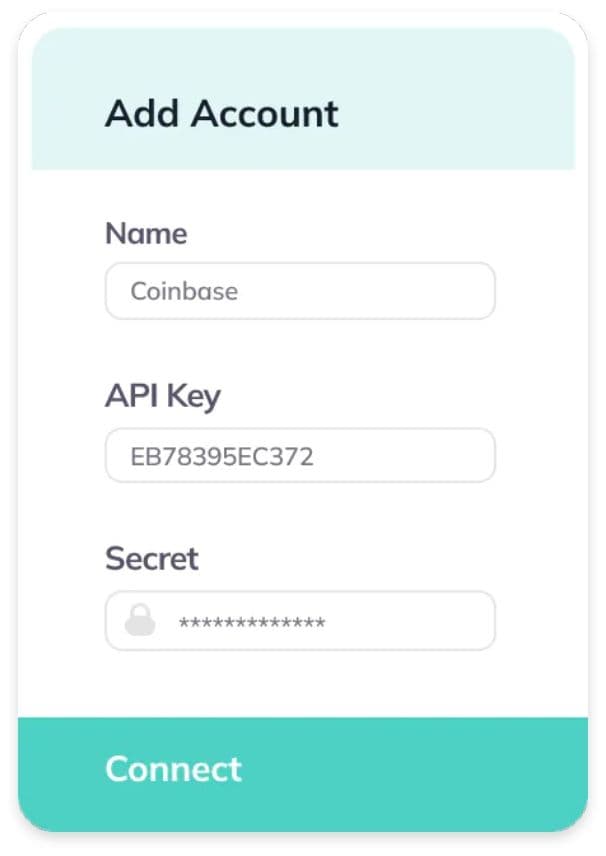
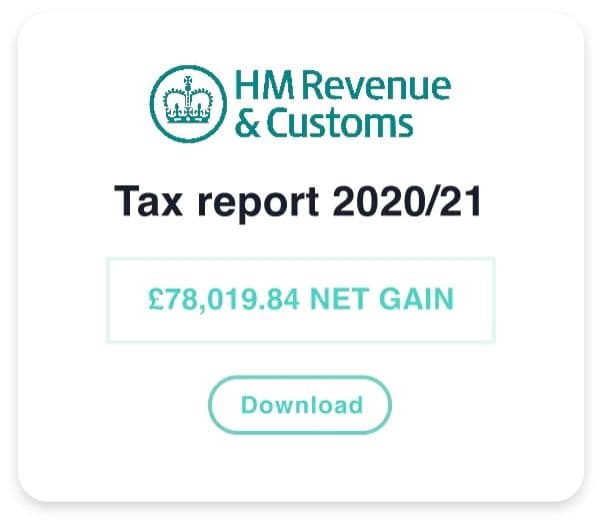
One disposal is easy. A year of trades, swaps, staking rewards and gas fees is not. Connect your exchanges and wallets, check the transactions Recap imports, and download an HMRC-ready report to file yourself or hand to your accountant.
Quickly add data from your exchanges and wallets
Automatically generate accurate crypto tax reports with everything you need to file your tax return
Aligned with the latest HMRC guidance so you don’t need to worry about staying up to date with the rules
The only crypto tax calculator that leaves you with full self custody of your financial data
No credit card required.