
Crypto markets are volatile — stretches of deep drawdowns often follow periods of significant growth. UK crypto investors holding assets at a loss have a useful strategy available: tax loss harvesting. Realising a loss before the end of the tax year offsets capital gains, reduces your CGT bill, and any unused losses carry forward to future tax years.
In this blog, we explore tax loss harvesting with Louise Lane, Head of Crypto Tax at Wright Vigar Chartered Accountants on the practical mechanics of tax loss harvesting for UK crypto investors — what the term means, how to claim a capital loss, and how to avoid HMRC's 30-day bed-and-breakfasting rule.
Capital losses cannot be carried back to an earlier tax year. To use a loss in the current 2025/26 tax year, you must realise it on or before 5 April 2026.
What is tax loss harvesting?
Tax loss harvesting is a term that’s normally heard more in the US and is the process of selling an investment that has experienced a loss to offset the capital gains from other investments, with the goal of minimising your tax liability. Within crypto, tax loss harvesting would involve disposing of assets that have decreased in value to realise losses against taxable gains.
How can tax loss harvesting help UK crypto investors?
If you're holding crypto at a loss, tax loss harvesting can help you recover some of the value through the tax system. By disposing of cryptoassets that have decreased in value before the end of the tax year (5 April), you realise losses you can offset against capital gains — reducing your CGT bill due the following 31 January. In the UK, unused capital losses are rolled forward indefinitely, so even if you don't have enough gains to use them all this year, they're banked for the future. With the CGT allowance now at £3,000 (down from £12,300 in 2022/23) and rates raised to 18%/24% on 30 October 2024, harvesting losses is more valuable than it has been for years.
How to claim a capital loss on your crypto?
You may be holding crypto that has decreased in value. It’s important to understand that until you actually dispose of the cryptoasset, ie. sell the asset at a lower price than you paid for it, or make a negligible value claim, you haven’t realised this loss for tax purposes.
You can keep holding an asset while it's down, but at this stage it's a hypothetical loss. Your portfolio could recover, so a loss can only be claimed if the asset is worthless and qualifies for a negligible value claim. Negligible value claims rely on HMRC's discretion on whether they accept the tokens were worthless on the claim date, and you must make the claim for all tokens in the same pool.
For this reason, it is less contentious to physically dispose of the asset. To realise a capital loss you’ll need to physically dispose of the asset that has decreased in value, for example by selling it for fiat, trading it for another crypto or using it to make a purchase.
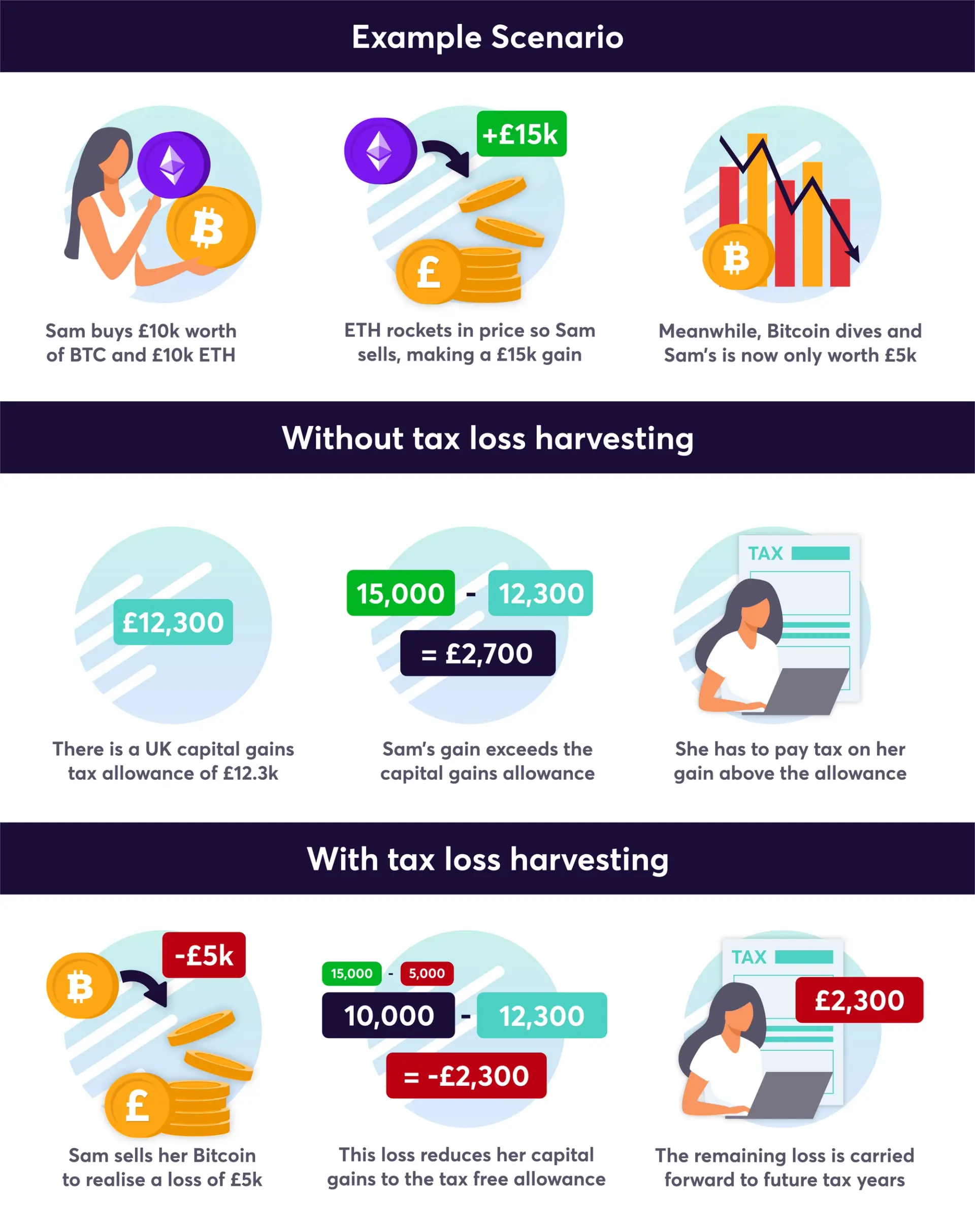
The capital loss is the difference between the disposal price of the asset and the original acquisition cost; subject to the HMRC matching rules dictating if this is an acquisition on the same day, next 30 days or from the average cost S104 pool.
Beware of the bed and breakfasting rules for cryptoassets that prevent you from realising the expected capital loss. If you buy back the same token within 30 days of the disposal, the new acquisition cost in that following 30 days is deducted in calculating the gain, rather than the S104 pool cost.
NFT’s are not subject to the matching rules, so buying an NFT back at a later date does not affect the capital loss. For NFT’s it is simply disposal price less acquisition cost.
Beware of making a capital loss on gifting crypto or NFT’s to a connected person. Such losses cannot reduce your other capital gains in the tax year and can only be used against future capital gains to the same person. See our Recap UK Tax Guide for more details on this.
Recap can help you identify which assets are ideal for tax loss harvesting
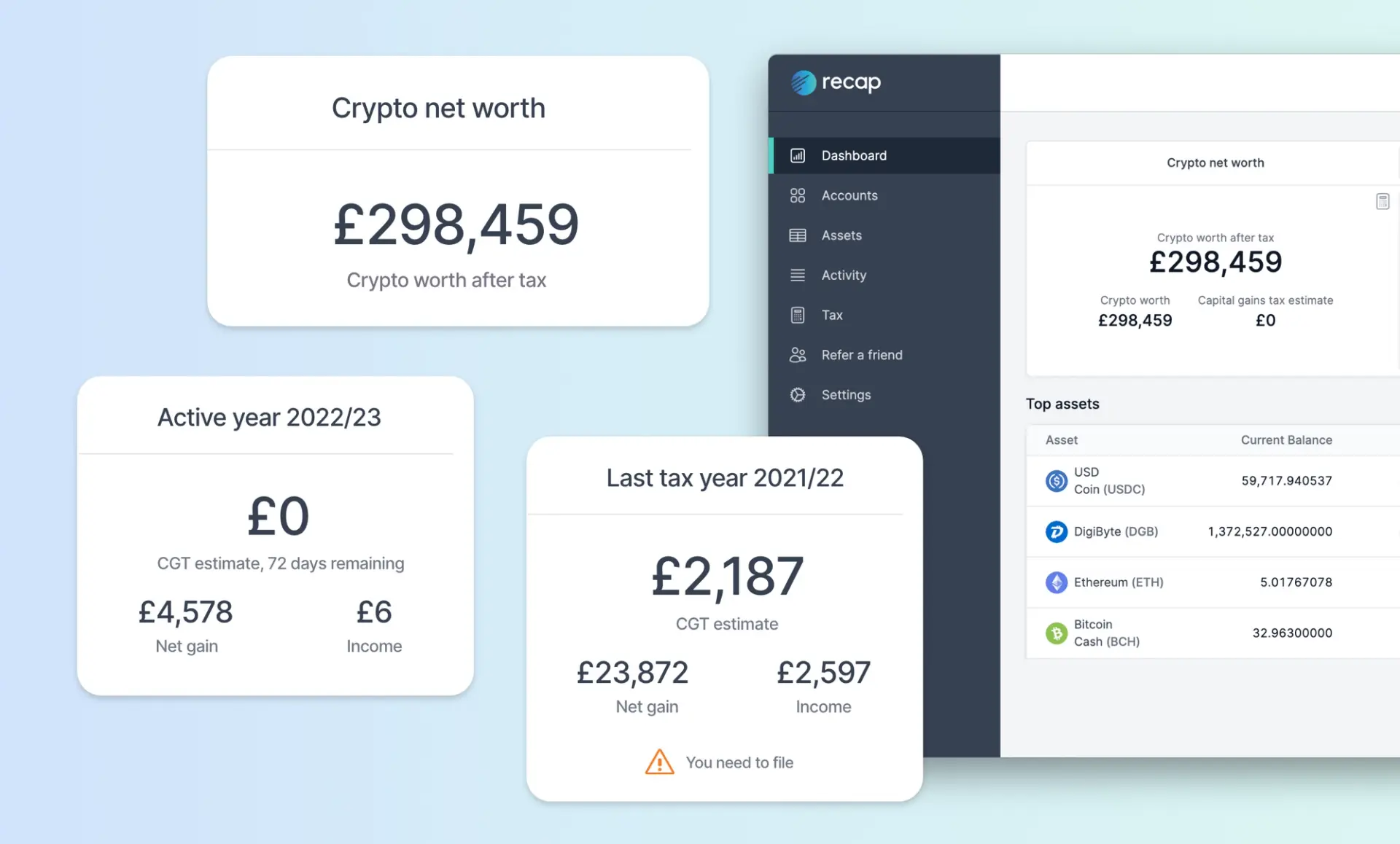
The Recap dashboard gives a live estimate of your capital gains for the open tax year making it easy to understand how much of your annual allowance has been used and how much tax you might need to pay.
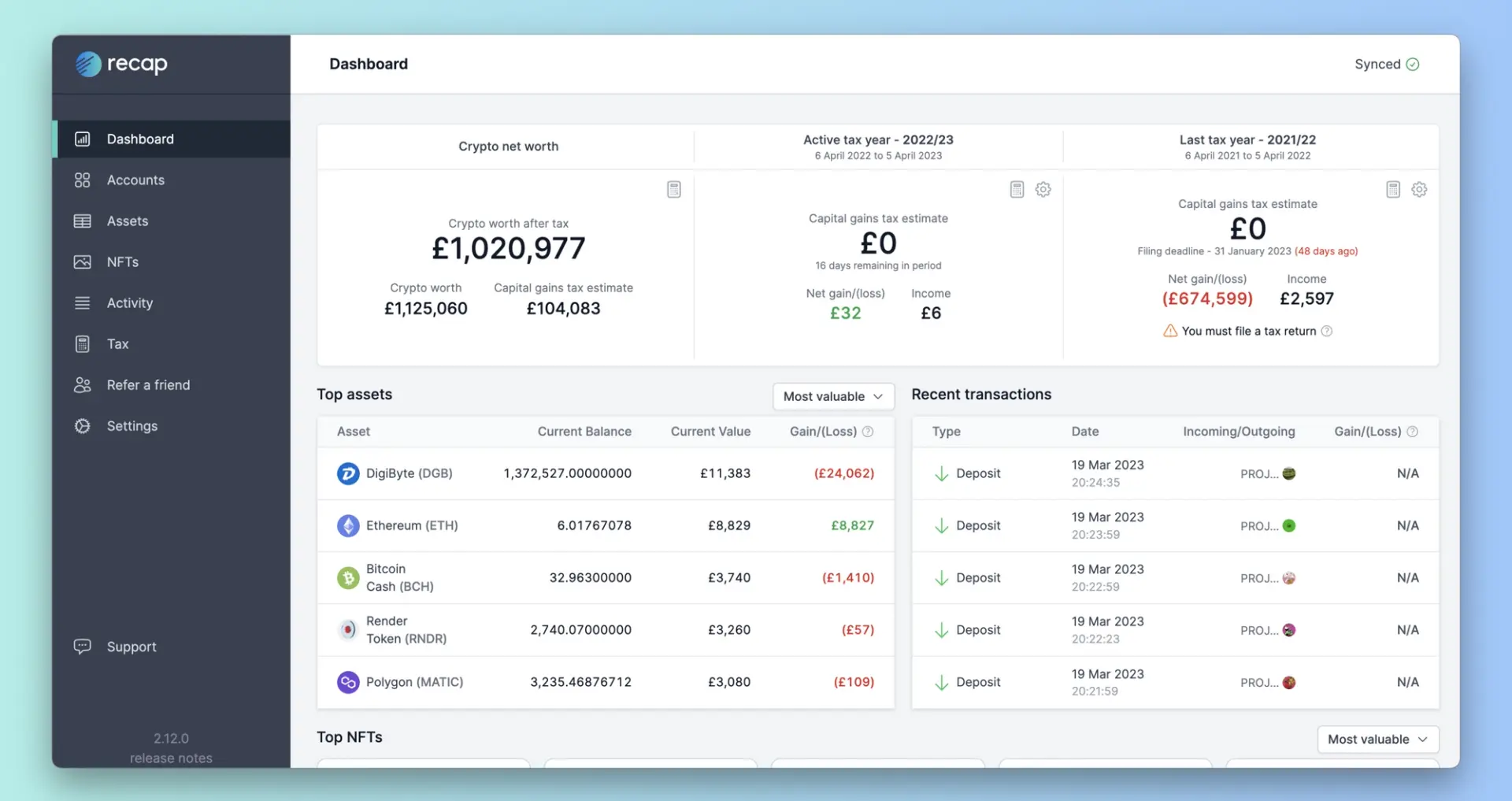
The top assets table shows your highest and lowest performing assets, helping you to quickly identify which assets have significantly dropped in value and are therefore optimal for tax loss harvesting.
Seek help from a tax professional and ensure you fully understand the rules
Writing off your losses can dramatically reduce your tax bill, but it’s a strategy that should only be used by those who understand the UK tax rules and are comfortable with the risk of buying and selling cryptocurrency and the volatility of the crypto market. It’s important to consult a tax professional before making any decisions,; they can help you navigate the complex tax rules with more detail, and put together a tax strategy that aligns with your individual situation.
Conclusion
Tax loss harvesting is a strong strategy for UK crypto investors looking to offset capital gains. By realising a capital loss by 5 April, you can offset gains in the current tax year and lower your tax bill — with any unused losses banked for future years. Capital losses cannot be carried back to an earlier tax year, so the end of the tax year is the last date to act. This strategy is best approached with care, ideally with help from tax professionals like Louise's team at Wright Vigar.
Disclaimer
This guide is intended as a generic informative piece. This is not accounting or tax advice that can be relied upon for any UK individual’s specific circumstances. Please speak to a qualified tax advisor about your specific circumstances before acting upon any of the information in this article.