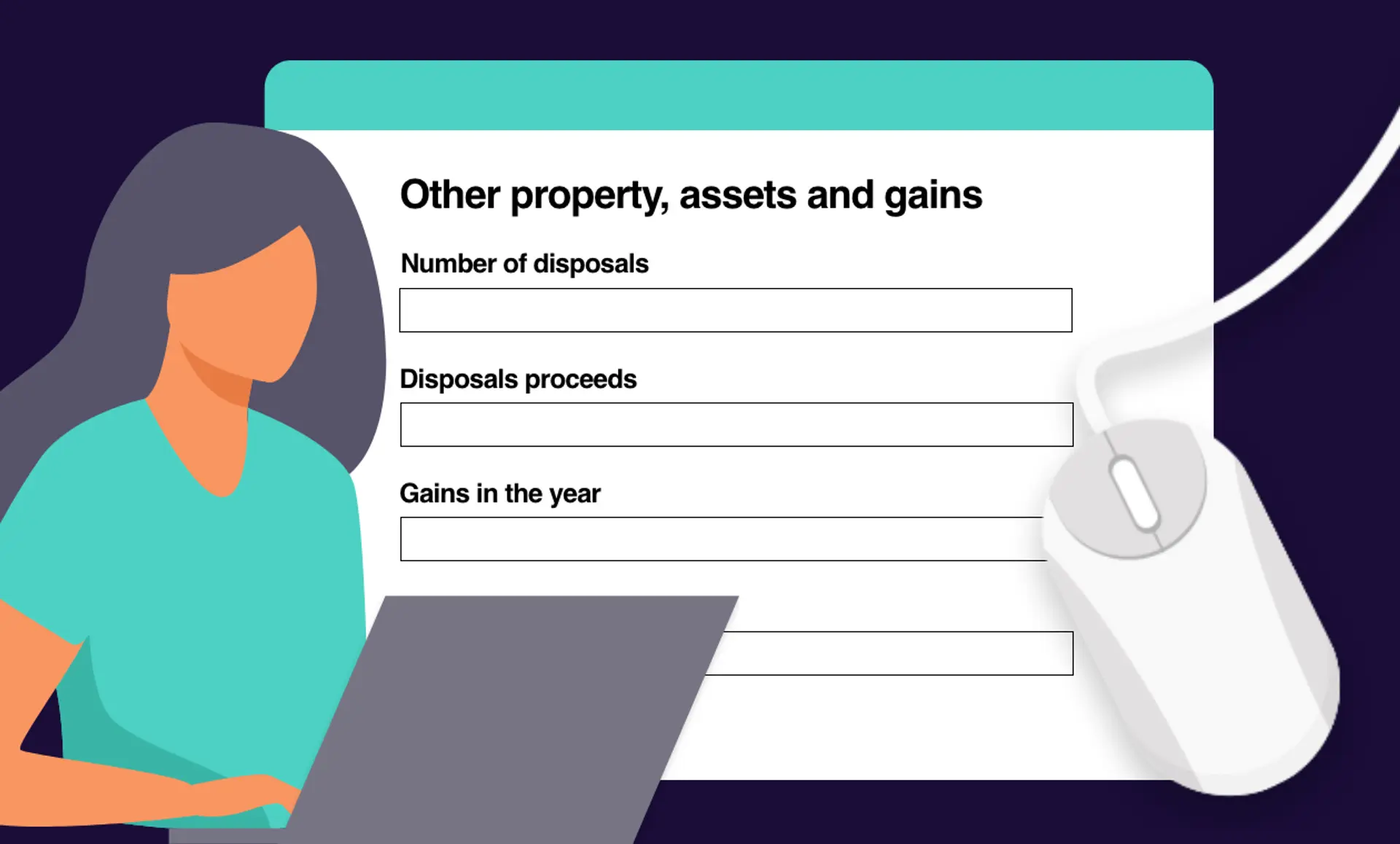

Filing your Self Assessment tax return for the 2025/26 tax year? HMRC's Self Assessment form now includes a dedicated section for cryptoassets — first introduced for 2024/25 and continuing for 2025/26. If you're a UK crypto investor, here's how to report your gains correctly for the 2025/26 return, due online by 31 January 2027.
This guide is intended as a generic informative piece. This is not accounting or tax advice that can be relied upon for any individual’s specific circumstances. Please speak to a qualified tax advisor about your specific circumstances before acting upon any of the information in this article.
What’s changing on the Self Assessment Tax Return?
Until 2023/24, if you sold, swapped, or spent crypto, you reported any gains in the general Capital Gains section of the Self Assessment form alongside stocks and shares. From the 2024/25 tax year onward, there's a separate section specifically for cryptoasset disposals — and that dedicated section continues to apply for the 2025/26 return you'll file by 31 January 2027.
This means:
- More visibility for HMRC into crypto activity
- A clearer structure for reporting crypto gains and losses
For 2025/26, UK CGT rates run at 18% (basic) and 24% (higher) for the full year — no mid-year split. If you're amending or filing an earlier 2024/25 return, see the split-tax-year section below for the dual-rate reporting that applied to 2024/25 only.
How to report crypto capital gains in HMRC’s new self assessment form
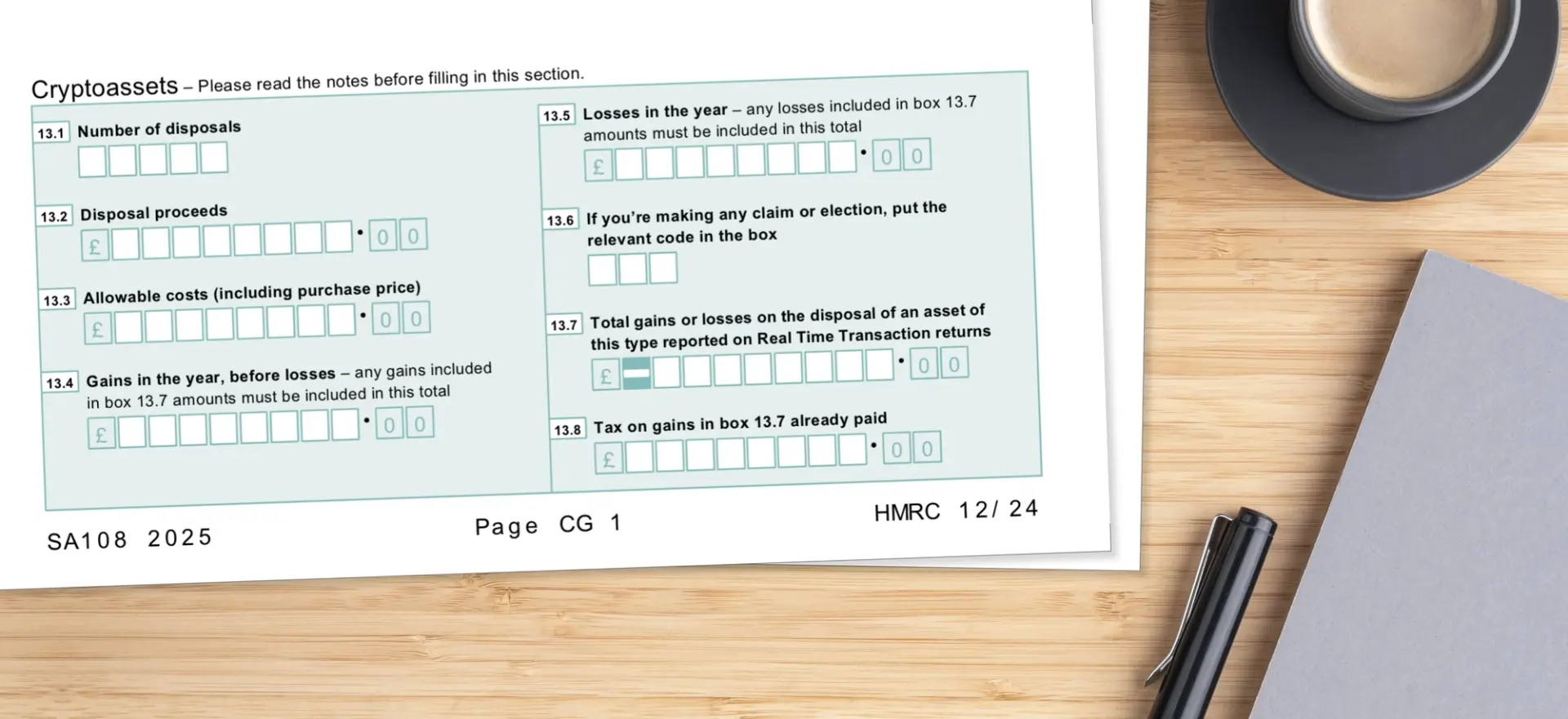
The crypto capital gains section of HMRC's Self Assessment Tax Return is pictured above. Here's what HMRC are asking you to declare on your 2025/26 return:
- Total number of disposals
- Disposals proceeds
- Allowable costs
- Gains in the year (before losses)
- Losses in the year
You’ll also need to include calculations and supporting evidence to show that you have followed HMRC’s pooling rules and demonstrate your proceeds and allowable costs. The Recap report which includes disposals and acquisitions does this sufficiently.
There is no change to reporting taxable income from crypto. You can check out our detailed article on how to file your crypto taxes for more information.
What about the 2024/25 split tax year?
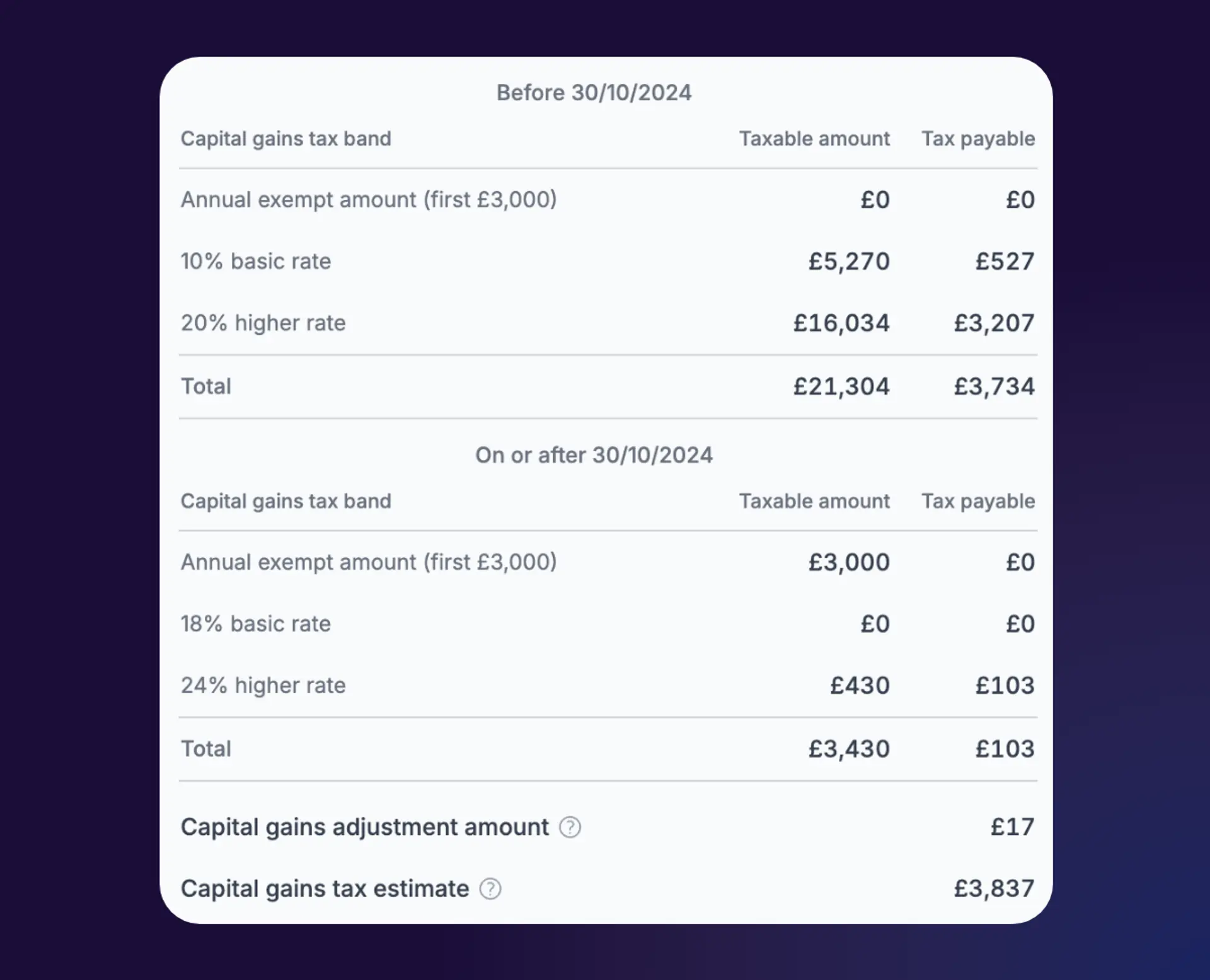
The 2024/25 tax year was a "split" year — HMRC introduced new CGT rates (18% basic / 24% higher) partway through, on 30 October 2024. Capital gains made in 2024/25 may therefore be taxed at different rates depending on when they were realised. For 2025/26, the new 18%/24% rates apply to the whole year, so no split is needed.
If you're filing or amending a 2024/25 return, the Self Assessment form includes prompts for the dual-rate split, but it's crucial that your records distinguish between disposals before and after 30 October 2024.
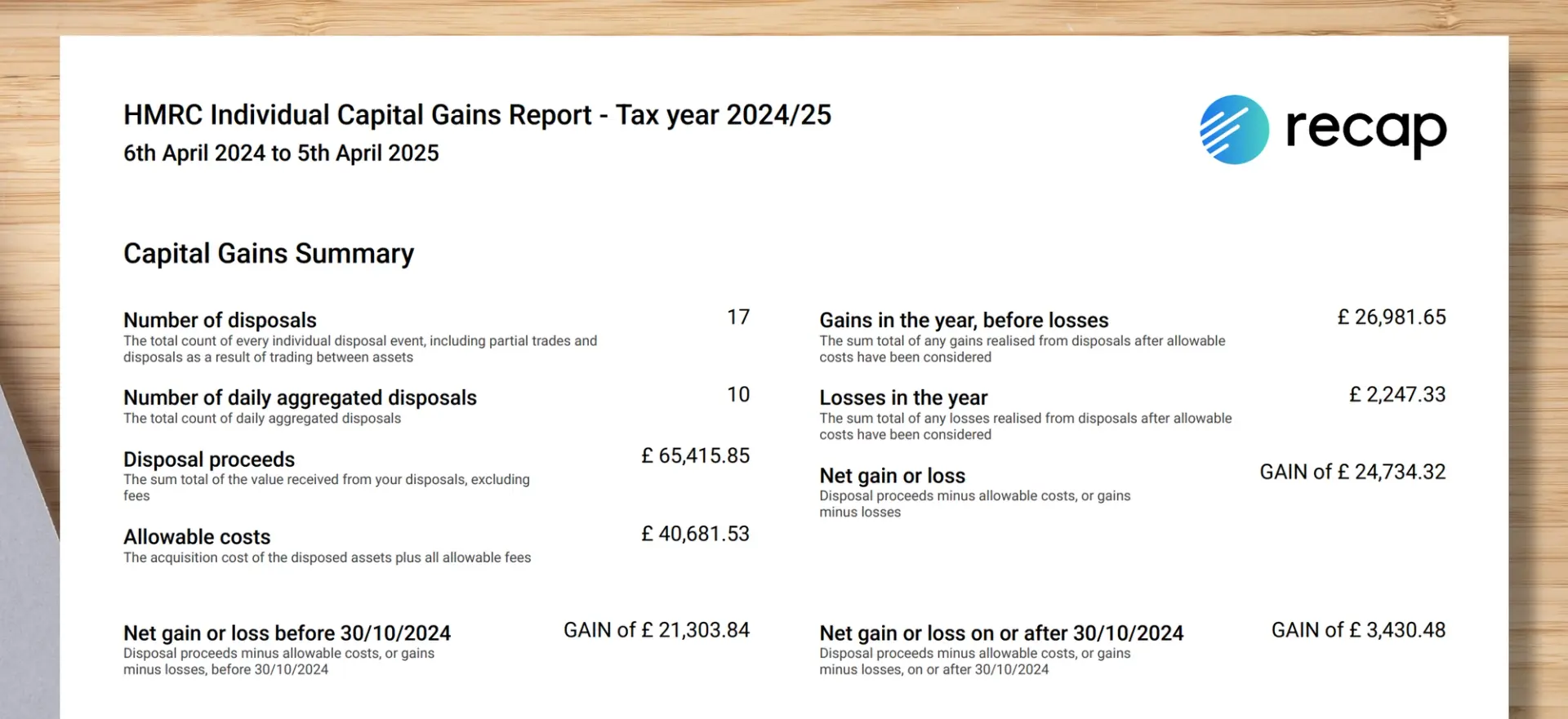
Recap makes this easy - your dashboard shows realised gains split across the two periods, with tax estimated accordingly. HMRC's Adjustment Calculator can also help you work out the adjustment for your Self Assessment tax return for disposals of assets on or after 30 October 2024 where the rates changed.
When do I need to file my 2025/26 tax return?
You don't need to file your 2025/26 return until 31 January 2027, but the filing window opens on 6 April 2026 — so you can get it done early. That said, waiting until at least May is advised because the bed-and-breakfast rule looks 30 days into the next tax year.
TL;DR
- Dedicated cryptoasset section on the Self Assessment form from 2024/25 onward — applies to your 2025/26 return
- You'll report your crypto gains, losses, and income more explicitly
- 2025/26 tax year: 18%/24% CGT rates apply for the full year (the 30 October 2024 mid-year split was a 2024/25-only event)
- Deadline: 31 January 2027 for the 2025/26 online return — Recap helps you stay compliant by calculating everything automatically
Can Recap help?
Recap helps you track and calculate your crypto taxes throughout the year, so you’re not scrambling for data when the deadline hits. Log in to Recap and get your data ready early for a stress-free tax season.