
Key takeaways
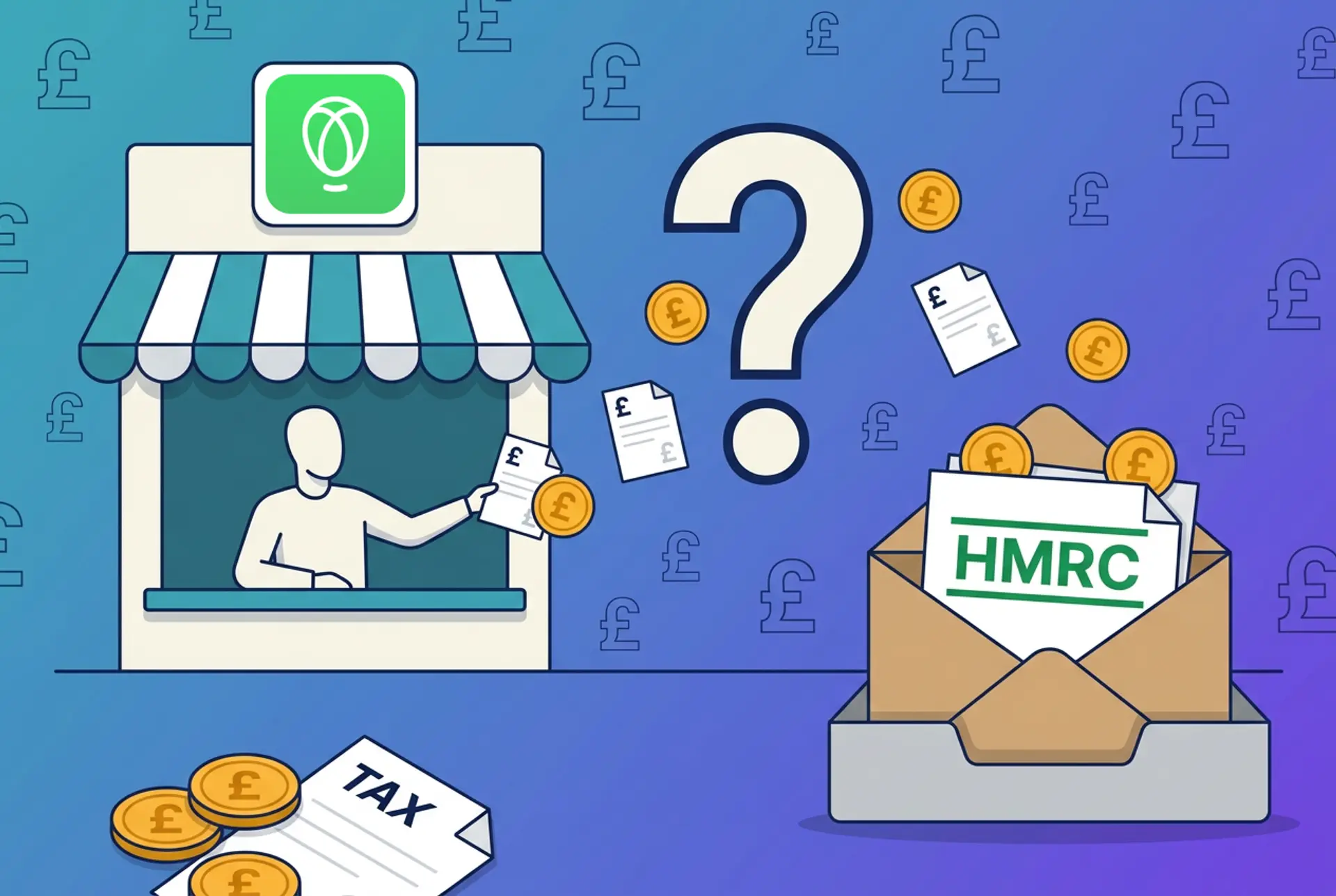
Yes, indirectly, and the way you trade on Uphold matters as much as the reporting. Uphold is not an offshore exchange.
It operates in the UK through an FCA-registered entity, so it sits with the compliant, UK-facing platforms rather than the venues on the FCA's warning list.
It does not file a running feed to HMRC today, but from 1 January 2026 the Cryptoasset Reporting Framework (CARF) brings UK-facing platforms into automatic reporting, and Uphold is set up to be part of that.
The twist with Uphold is its anything-to-anything model: you can swap crypto straight into another crypto, into a stablecoin or into fiat in a single move, and every swap that touches crypto is a disposal for capital gains tax, even though no pounds change hands.
If you have used Uphold and not declared your gains, now is the time to get on top of it.
What follows walks through where Uphold sits with UK regulators, what the new reporting rules will hand to HMRC, why its cross-asset swaps catch so many people out at tax time, and how to put things right if you are behind. It reflects HMRC, FCA and OECD positions as of June 2026.
Disclaimer
This guide is intended as a generic informative piece. This is not accounting or tax advice that can be relied upon for any UK individual's specific circumstances. Please speak to a qualified tax advisor about your specific circumstances before acting upon any of the information in this article.
Uphold is one of the UK-registered platforms in our comparison of which crypto exchanges report to HMRC, if you want to see the whole field at once.
Does Uphold share data with HMRC?
Uphold does not send HMRC a routine feed of its UK customers today, in the sense that there is no public record of a blanket customer-data handover. But Uphold is a very different proposition from an offshore exchange. It operates in the UK as an FCA-registered business, which means it has chosen to work inside the UK's rules rather than around them, and a registered, compliant platform is one that reports more readily, not less.
HMRC also has long-standing powers to obtain data even without a routine feed. It can require businesses to hand over information under Schedule 23 of the Finance Act 2011 and Schedule 36 of the Finance Act 2008, and it has used those powers on the crypto sector before. In 2020 Coinbase notified its UK customers that it was passing account details to HMRC, covering 2019/20 accounts that received more than £5,000 of crypto, the clearest sign that HMRC can and does reach into UK-facing platforms. Add the trail your money leaves whenever it passes through a UK bank, and the realistic position is that your Uphold activity is far from invisible.
Uphold may not be reporting you automatically just yet, but as a UK-registered platform it is exactly the kind of business the new rules are built around, and that picture sharpens in 2026.
What changes from 1 January 2026: the Cryptoasset Reporting Framework
CARF is the framework the OECD designed to pull crypto into the same automatic information-sharing that has covered offshore bank accounts for over a decade. The UK wrote it into law as The Reporting Cryptoasset Service Providers (Due Diligence and Reporting Requirements) Regulations 2025, live from 1 January 2026, and our explainer on the OECD's CARF release sets out the detail.
For a UK-facing platform like Uphold, the route to HMRC is the direct one. A registered provider serving UK residents collects a defined set of data on its customers and reports it to the tax authority, which is the whole point of the regime. That is a more straightforward path than the international exchange of information that catches a purely offshore venue, and it is why a registered platform such as Uphold is squarely in scope from the start. CARF is the crypto equivalent of the system that already shares bank-account data across more than 100 countries.
What information is reported under CARF?
Where a provider is in scope, CARF fixes the data set it must report for each UK-resident customer.
| Identity data | Transaction data |
|---|---|
| Full name | Transaction types (exchanges, transfers, spending) |
| Date of birth | Annual aggregate value |
| Home address | Units and asset type |
| Country of tax residence | - |
| National Insurance / UTR | - |
Each provider sends its report to its own tax authority, and CARF members then exchange those reports with one another, so a UK resident's activity stays visible wherever it sits. Under HMRC's CARF guidance, the rules carry penalties for users and providers alike: a user who deliberately or carelessly fails to provide a valid self-certification can face a penalty of up to £300, while reporting providers face separate penalties for due-diligence, reporting, notification, registration and record-keeping failures.
When does CARF reporting take effect?
| Date | What happens |
|---|---|
| 1 January 2026 | Data collection begins for in-scope providers with UK customers. |
| 31 May 2027 | First reports due to HMRC, covering the 2026 calendar year. |
| From 2027 onwards | International exchange of CARF data between countries begins. |
In practice that means that from the 2026/27 tax year, HMRC should be receiving a yearly summary of reportable Uphold activity it can line up against your own return.
Is Uphold regulated in the UK?
Yes, within the limits that apply to every crypto firm here. Uphold operates in the UK through Uphold Europe Limited, which has been on the FCA's cryptoasset register since February 2022. You can look it up on the FCA register.
Being on the FCA's cryptoasset register shows Uphold has met the FCA's anti-money-laundering standards. It does not make crypto a regulated investment, and it does not bring your holdings under the Financial Services Compensation Scheme. What it does tell you is that Uphold is an FCA-registered, UK-facing business, which is the camp that automatic reporting is built around. As one sign of that UK footprint, Uphold reinstated crypto staking for UK users in February 2025 after a change to the UK rules, having paused it while the position was unclear. None of this changes your own responsibility: registered or not, you are the one who has to declare your gains and income to HMRC.
Why Uphold's anything-to-anything model is easy to misreport
This is where Uphold stands apart from a typical exchange. Uphold is a multi-asset platform, and its signature feature is what it calls anything-to-anything trading: for UK users you can swap directly between hundreds of assets, spanning cryptoassets, fiat currencies and stablecoins, in a single transaction. That is genuinely useful, and it is also a quiet tax trap.
- Every cross-asset swap that involves crypto is a disposal. Moving from Bitcoin straight into another crypto, into a stablecoin or into fiat is a disposal of the crypto you gave up, valued in pounds at the moment of the swap. It does not feel like a sale because you never see fiat, but for capital gains tax it is one, and an active account can stack up a lot of them.
- Crypto and non-crypto sit side by side. A complete and correct picture means splitting the crypto disposals out from the rest, which is fiddly to do by hand when everything lives in one place.
- A card for every asset. Uphold holds each asset in its own wallet, which it calls a card, and value moves between those cards as deposits, transfers and withdrawals. Transfers between your own cards are not disposals, but a swap from one asset to another is, and the two have to be told apart.
- Recurring buys add volume. Uphold supports automated, recurring purchases, which quietly multiply the number of acquisitions you need to track and pool correctly.
Pulling an accurate tax position out of that by hand is genuinely hard, and it is one of the most common reasons Uphold users end up with inaccurate tax calculations.
Why has HMRC been sending nudge letters about crypto?
A nudge letter is what HMRC tends to send when its records and your return do not agree. It stops short of being an investigation; it is really a prompt to look again at your tax affairs and fix whatever is missing, and it usually mentions that HMRC is holding information about undeclared crypto.
And the programme has scaled quickly: HMRC issued 64,982 crypto nudge letters in 2024/25, against 27,713 the year before, roughly 134% more, on figures from a Freedom of Information request by accountancy firm UHY Hacker Young. Data matching drives these campaigns, and their fuel supply grows with every new reporting stream, so a registered platform like Uphold that is set to report under CARF feeds them directly. Ignoring a letter is the costly move: a voluntary correction almost always works out cheaper than a formal enquiry, and our guide on what to do if you receive an HMRC nudge letter about your crypto covers your options.
Can HMRC see my Uphold transactions?
Not by logging into your account, and not in real time. HMRC builds its picture from data: what it can compel under its statutory powers, the trail your funds leave through UK banks, and, as CARF reporting beds in, the reports a UK-registered platform makes directly. With Uphold the picture is sharper than for an offshore venue precisely because it is registered and UK-facing, so the safe assumption is that your activity is visible, or about to be.
How are Uphold gains taxed in the UK?
On the crypto side, Uphold is taxed like any other UK crypto activity, with one wrinkle that bites harder here than almost anywhere. Disposing of crypto, whether you sell it for fiat or swap it for another coin, is a capital gains event settled through HMRC's share-pooling rules, which our comprehensive UK crypto tax guide walks through in full, and any crypto you earn, staking rewards included, is taxed as income at its value on the day it lands. The Uphold-specific catch is that swapping crypto straight into a stablecoin is still a disposal of the crypto you handed over, even though you have not touched fiat.
Example: Daniel's Uphold swaps. Daniel bought £4,000 of Bitcoin on Uphold. When the market wobbles, he uses Uphold's anything-to-anything swap to move straight from Bitcoin into the stablecoin USDC, in a single transaction worth £9,000. He never touches fiat, so it does not feel like a sale, but for tax it is one. Swapping the Bitcoin for USDC is a disposal at its £9,000 value, a £5,000 capital gain. With the current £3,000 annual exempt amount, £2,000 of that gain is taxable. When Daniel later swaps the USDC back into Ethereum, that swap is a disposal of the USDC too, and the Ethereum starts a fresh Section 104 pool at that day's value. For a quick estimate on a single disposal like this, our free crypto tax calculator does the sums.
What should I do if I have undeclared Uphold gains?
The thing that protects you here is moving before HMRC does. If you have gains or income from Uphold that never made it onto a return, a disclosure you volunteer is treated far more kindly than one HMRC has to prise out.
1. Work out what you owe. Pull together your full Uphold history: every cross-asset swap, sale and conversion involving crypto, any staking rewards, and your deposits and withdrawals. Separate the crypto disposals from transfers between your own cards, then apply HMRC's share-pooling rules to the crypto and treat staking rewards as income from crypto.
2. Tell HMRC. For a tax year that is still open, the fix is an online amendment to your Self Assessment return: that stays possible for 12 months past the filing deadline, so a return filed by 31 January 2026 can be revised right up to 31 January 2027. Once a year has closed, HMRC's purpose-built channel is the Cryptoasset Disclosure Facility, running since November 2023 for unpaid Income Tax or Capital Gains Tax on crypto.
3. Pay what is due. Late tax attracts interest, and usually a penalty as well, but that penalty shrinks when the disclosure comes before HMRC makes contact, so there is real money in not waiting. If the cross-asset side of your account makes things complicated, our directory can help you find a Recap-verified UK crypto tax specialist.
How Recap helps with Uphold tax
Recap connects to Uphold and brings your whole history into one place, then classifies and values every entry so you get a complete UK tax report. You connect your Uphold account to Recap via API, and Recap reads your transactions across every asset card, works out which swaps are crypto disposals, separates them from transfers between your own cards, values everything with our fair-market valuation engine, and applies HMRC's rules. You can see the setup on our Uphold integration page.
Connect your Uphold account to Recap and let it turn a maze of cross-asset swaps into a clear set of UK gains and income figures, packaged into a report you can file yourself or pass to your accountant.
References
- HMRC and OECD: Cryptoasset Reporting Framework, domestic reporting of UK-resident cryptoasset users
- HMRC: Implementation of the Cryptoasset Reporting Framework (penalties for users and reporting providers)
- The Reporting Cryptoasset Service Providers (Due Diligence and Reporting Requirements) Regulations 2025
- Schedule 23, Finance Act 2011
- Schedule 36, Finance Act 2008
- HMRC Cryptoasset Disclosure Facility
- Nudge-letter statistics: UHY Hacker Young Freedom of Information request
- Uphold UK regulatory status: FCA cryptoasset register entry, Uphold Europe Limited (registered February 2022)
- Coinbase 2020 notification to UK customers (2019/20 accounts over £5,000)