
Key takeaways
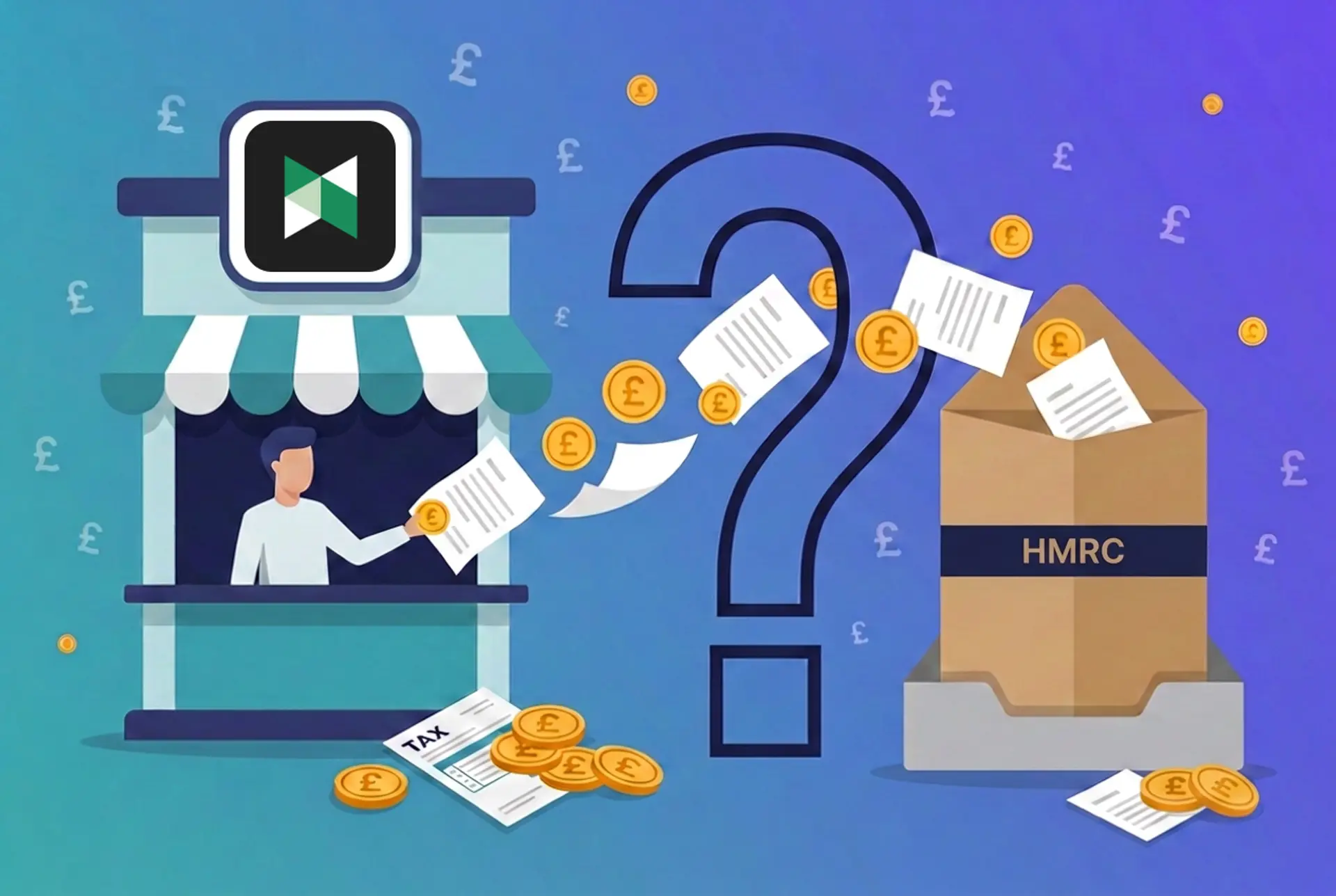
There is no evidence Poloniex reports you to HMRC directly, but your activity is not beyond reach.
Poloniex is one of the older crypto exchanges, launched around 2014, but it is now an offshore operation linked to Justin Sun, and it sits on the FCA's warning list rather than its register.
That means it is not FCA-authorised or registered, and if something goes wrong you will not have access to protections such as the Financial Ombudsman Service or the Financial Services Compensation Scheme. It does not mean your activity is hidden.
HMRC can piece it together from UK banks and other exchanges and its own information powers, and from 1 January 2026 the Cryptoasset Reporting Framework (CARF) may bring offshore data to HMRC where the relevant provider falls within a reporting regime.
Older Poloniex accounts may contain more than simple spot trades: historic lending returns, staking rewards and margin activity are all easy to misreport. If you have used Poloniex and not declared your gains and income, now is the time to sort it out.
This guide covers what HMRC can realistically see, who owns Poloniex and where it stands with regulators, how its trades and historic rewards are taxed, and the steps to take if you are behind. It reflects HMRC, FCA and OECD positions, and Poloniex's published information, as of July 2026.
Disclaimer
This guide is intended as a generic informative piece. This is not accounting or tax advice that can be relied upon for any UK individual's specific circumstances. Please speak to a qualified tax advisor about your specific circumstances before acting upon any of the information in this article.
Poloniex is one of the offshore venues in our comparison of which crypto exchanges report to HMRC, alongside the UK-registered and European platforms.
How Poloniex's ownership changed, and where it is based
Poloniex has changed hands in a way that shapes its risk profile, so it is worth knowing the story. It launched around 2014 as a United States exchange, was bought by the payments company Circle in 2018, and was then sold on in 2019 to a group of overseas investors. Justin Sun, the founder of Tron, confirmed he was part of that group. The operating company became Polo Digital Assets, Ltd, and Poloniex stopped serving United States customers that same year. The FCA's warning identifies Poloniex / Polo Digital Assets, Ltd at an address in Seychelles.
Why does ownership matter for a tax article? Because it tells you what kind of business you are dealing with. Poloniex is not on the FCA's cryptoasset register. It is an offshore platform, and in November 2023 it temporarily disabled its wallet after a hot-wallet attack in which on-chain data indicated around 114 million dollars had been stolen. The incident underlines the importance of keeping an independent copy of your transaction history rather than relying solely on continued access to the platform.
Does Poloniex share data with HMRC?
There is no public evidence that Poloniex currently sends HMRC a routine feed of its UK customers. But being based offshore does not put its users' activity beyond HMRC's reach. HMRC assembles its picture from several directions, and an exchange being based overseas simply changes the route, not the destination.
It can use its domestic information powers, under Schedule 23 of the Finance Act 2011 and Schedule 36 of the Finance Act 2008, where they apply, obtain information from UK banks and other platforms, and use international information-exchange arrangements to pursue offshore data. It has turned those tools on the crypto sector before: in 2020 Coinbase notified UK customers that it would share account data with HMRC, covering 2019/20 accounts that received more than £5,000 of crypto. On top of that, money moving into or out of Poloniex may pass through a UK bank or another exchange, and those on and off ramps are a trail back to you. So the honest read is that there is no public evidence Poloniex sends HMRC a routine direct feed today, but your activity is far from untraceable, and the reporting net is tightening.
What changes from 1 January 2026: the Cryptoasset Reporting Framework
CARF is the OECD's system for moving crypto data between tax authorities automatically, the same way details of offshore bank accounts have been shared for years. The UK brought it in as The Reporting Cryptoasset Service Providers (Due Diligence and Reporting Requirements) Regulations 2025, effective 1 January 2026, and our explainer on the OECD's CARF release goes into the detail.
The reason it matters for an offshore platform is that CARF is designed to work across borders. As more countries adopt it, cryptoasset providers report the customers they serve to their local authority, and those authorities exchange the information with one another, so a UK resident's data can reach HMRC even when the provider sits outside the UK. An exchange choosing to operate offshore is exactly the gap CARF is built to close, which is why offshore is becoming a weaker place to hide activity, not a stronger one.
What information is reported under CARF?
Once a provider is in scope, CARF sets a fixed list of what it must collect on each reportable customer, covering both identity and activity.
The identity details are your full name, date of birth, home address, country of tax residence, and your National Insurance number or Unique Taxpayer Reference. The activity details are the types of transaction you made, such as exchanges, transfers and spending, the total value across the year, and the units and type of each asset.
Where a provider falls within an implementing jurisdiction's reporting regime and the relevant exchange relationship is active, its report is filed with the appropriate local authority and the UK-resident user data may then be exchanged with HMRC. Under HMRC's CARF guidance, the rules carry penalties for users and providers alike: a user who deliberately or carelessly fails to provide a valid self-certification can face a penalty of up to £300, while reporting providers face separate penalties for due-diligence, reporting, notification, registration and record-keeping failures.
When does CARF reporting take effect?
Under the UK regime, in-scope UK providers began collecting data on 1 January 2026, with the first reports due to HMRC by 31 May 2027 covering the 2026 calendar year, and the international exchange of CARF data between countries starting from 2027. Overseas providers follow the timetable and rules applying in their own jurisdiction.
For anyone using Poloniex, the takeaway is that where the relevant provider is in scope, your 2026 activity may form part of that first reporting period, so the time to get your records in order is now, not after HMRC starts receiving data.
Where Poloniex stands with UK regulators
This is the part to be clear-eyed about. Poloniex is not on the FCA's cryptoasset register, and the FCA has placed it on its warning list, cautioning that the firm may be promoting to UK consumers without permission and that dealing with it leaves you without access to the Financial Ombudsman Service or the Financial Services Compensation Scheme. In line with the UK ban on crypto-derivatives for retail consumers, Poloniex has also wound down its futures offering for UK users.
None of that changes your tax position. Using an offshore or unauthorised exchange does not change the UK tax rules: taxable gains and income remain subject to the usual declaration and reporting requirements. If anything, using a venue the FCA warns about is a reason to be more careful with your own records, since you cannot rely on the platform to be there, or to hand you clean statements, when you need them.
How are Poloniex trades, historic lending returns and margin activity taxed in the UK?
Poloniex covers more ground than a basic buy-and-sell exchange, so the tax splits along two tracks, and older accounts are where the extra activity hides. Disposals go through capital gains tax: selling crypto for pounds, or swapping one crypto asset for another, is a disposal worked out using HMRC's Section 104 pooling rules, which our comprehensive UK crypto tax guide explains in full. Historic margin activity, which Poloniex wound down in 2022, can involve several separate entries, including borrowed assets, trades, repayments, interest and fees. Spot purchases and disposals will generally feed into the capital-gains calculation, but the precise treatment depends on how the position was structured and recorded.
The income track is where Poloniex catches people out. Periodic lending returns and staking rewards are often treated as income at their sterling value when received. If you later dispose of those tokens, that can create a separate capital gain or loss measured from the value already recognised for tax when you received them. However, HMRC says the result depends on the terms and structure of the arrangement: some lending transactions can also create capital disposals, and some returns may be capital rather than income. Because these payouts tend to arrive as a steady stream of small amounts, they are easy to leave in the account and forget at tax time.
Example: Marcus's Poloniex year (simplified). Marcus earns the equivalent of £900 in lending returns across the year, paid in regular small amounts. Assuming those are recurring returns treated as income, that £900 is income, valued as he received it, and goes on his Self Assessment. Separately, he sells Bitcoin he had bought for £5,000 for £9,000. That sale is a disposal: a £4,000 gain. Assuming he has no other gains or allowable losses and the full current £3,000 annual exempt amount is available, £1,000 of that is taxable. So Marcus has two things to report from one account, an income figure and a capital gain, even though he only withdrew once. For a quick estimate on a single disposal like the sale, our free crypto tax calculator does the sums.
Why has HMRC been sending nudge letters about crypto?
When the data HMRC holds does not line up with what someone has declared, a nudge letter is often the first contact. It is not a formal investigation, more a prompt to look again at your tax affairs and correct anything missing, and it usually mentions that HMRC holds information suggesting undeclared crypto.
HMRC has scaled these up sharply: it issued 64,982 crypto-related nudge letters during 2024/25, up from 27,713 during 2023/24, roughly 134% more, figures brought out by a freedom-of-information request by accountancy firm UHY Hacker Young. Data matching drives the campaigns, and the pool of data grows as CARF reporting begins. Undeclared lending or staking returns are a natural mismatch for this kind of exercise, because they are receipts that may have been left off your return. Our guide on what to do if you receive an HMRC nudge letter about your crypto walks through the options.
What should I do if I have undeclared Poloniex gains or income?
If you have used Poloniex and not declared your income or gains, it is worth acting before HMRC comes to you. An unprompted disclosure can result in lower penalties than waiting for HMRC to begin an enquiry, depending on the circumstances, and with an offshore venue there is an extra reason to move: your access to records is not guaranteed.
First, get your records together while you still can, so you have every trade, every lending or staking payout, and your deposits and withdrawals in one place. Export your history or connect the account to tax software now rather than later. Second, work out what you owe: treat recurring lending and staking returns as income from crypto at their value on receipt, bearing in mind the treatment can depend on how the arrangement was structured, and apply HMRC's Section 104 pooling rules to your disposals. Third, tell HMRC and pay. For a tax year that is still open, amend your Self Assessment return online, which you can do up to 12 months after the statutory filing deadline, so a 2024/25 online return, whose normal filing deadline was 31 January 2026, can generally be amended until 31 January 2027; for years that have already closed, use the Cryptoasset Disclosure Facility, open since November 2023. Late tax also carries interest, and penalties may apply, and if your history is complicated you can find a Recap-verified UK crypto tax specialist on our directory.
How Recap helps with Poloniex tax
An offshore account with spot trades plus historic margin, lending and staking mixed into the history is exactly the kind of record that is painful to untangle by hand, and that is where Recap comes in. You connect your Poloniex account to Recap by API, or upload a CSV export, and Recap imports your trades, deposits, withdrawals, and supported historical lending returns and staking rewards, values each entry, and organises them into capital gains and income under HMRC's rules. Where the tax character of a lending return depends on how the arrangement was structured, you can review and confirm the treatment rather than relying on a single automatic answer. Doing it now also means you have a permanent record, whatever happens to the platform. You can see the setup on our Poloniex integration page.
Connect your Poloniex account to Recap and turn a tangled offshore history into a single reconciled set of UK income and gains you can file yourself, or pass to your accountant with confidence.
References
- HMRC and OECD: Cryptoasset Reporting Framework, domestic reporting of UK-resident cryptoasset users
- HMRC: Implementation of the Cryptoasset Reporting Framework (penalties for users and reporting providers)
- The Reporting Cryptoasset Service Providers (Due Diligence and Reporting Requirements) Regulations 2025 (SI 2025/744)
- Schedule 23, Finance Act 2011
- Schedule 36, Finance Act 2008
- HMRC Cryptoasset Disclosure Facility
- HMRC Cryptoassets Manual, CRYPTO61130: DeFi lending and staking, making a DeFi loan
- Nudge-letter statistics: UHY Hacker Young freedom-of-information request
- FCA warning: Poloniex / Polo Digital Assets, Ltd (poloniex.com / poloniex.org)
- Poloniex winding down futures trading in the United Kingdom
- Circle acquires Poloniex (2018)
- Justin Sun confirms involvement in Poloniex purchase from Circle (2019)
- Poloniex November 2023 hot-wallet attack (on-chain data indicated around $114m stolen; wallet temporarily disabled)
- Poloniex margin and lending announcement (global wind-down from 9 March 2022)
- Coinbase 2020 notification of UK customer-data sharing with HMRC (2019/20 accounts over £5,000)