
Key takeaways
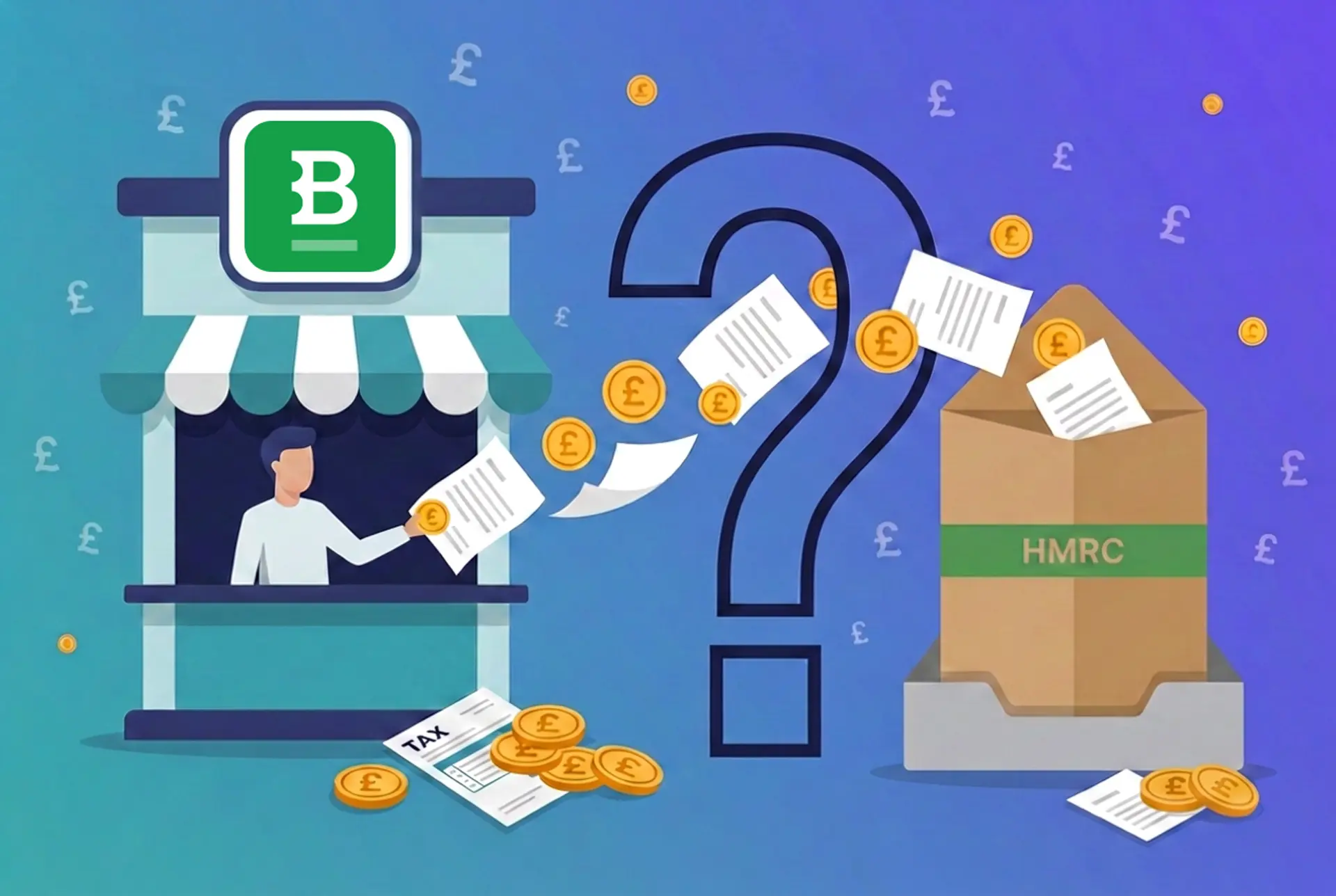
Yes, and it is getting harder to avoid. Bitstamp is not an offshore exchange.
It launched in 2011, it is registered with the FCA as a cryptoasset business through Bitstamp UK Ltd, and in June 2025 it became part of Robinhood, a US-listed company, so it sits with the compliant, UK-facing platforms.
It does not send HMRC a running feed today, but from 1 January 2026 the Cryptoasset Reporting Framework (CARF) brings UK-facing exchanges into automatic reporting.
What makes Bitstamp different from most exchanges people ask about is its age: a long-held account can carry more than a decade of trades, funded across several currencies, and pulling an accurate tax position out of that is the real job.
If you have gains on Bitstamp you have not declared, this is a good time to catch up.
Over the next few sections we cover how much HMRC can actually see, where the Robinhood-owned Bitstamp now sits with UK regulators, why a trading history this long is so easy to get wrong, and how to put things right if you are behind. It reflects HMRC, FCA and OECD positions as of June 2026.
Disclaimer
This guide is intended as a generic informative piece. This is not accounting or tax advice that can be relied upon for any UK individual's specific circumstances. Please speak to a qualified tax advisor about your specific circumstances before acting upon any of the information in this article.
Bitstamp is one of the UK-registered platforms in our comparison of which crypto exchanges report to HMRC, which is the place to start if you use more than one exchange.
Does Bitstamp share data with HMRC?
Bitstamp does not hand HMRC a routine feed of its UK customers today, and there is no public record of a blanket customer-data handover. But it is a long way from an offshore venue keeping UK users at arm's length. It holds an FCA registration, it settles in pounds through the UK's Faster Payments System, and it is now owned by a publicly listed company that answers to regulators on both sides of the Atlantic. That is the profile of a business built to work inside the rules, and a compliant, registered platform is one that reports more readily, not less.
HMRC also has powers that do not depend on any voluntary feed. It can require businesses to produce information under Schedule 23 of the Finance Act 2011 and Schedule 36 of the Finance Act 2008, and it has used those powers on crypto before. In 2020 Coinbase notified its UK customers that it was sharing account details with HMRC, covering 2019/20 accounts that received more than £5,000 of crypto. Because Bitstamp deals in fiat, your money almost always touches a UK bank on the way in or out, and that is another place your activity becomes visible.
So the honest read is that Bitstamp may not be reporting you automatically just yet, but it is precisely the kind of registered, UK-facing business the new rules are aimed at, and the picture sharpens in 2026.
What changes from 1 January 2026: the Cryptoasset Reporting Framework
CARF is the OECD's way of putting crypto on the same automatic, cross-border reporting footing that offshore bank accounts have sat on for years. The UK brought it into force through The Reporting Cryptoasset Service Providers (Due Diligence and Reporting Requirements) Regulations 2025 from 1 January 2026, and our explainer on the OECD's CARF release has the full picture.
For a registered, UK-facing exchange like Bitstamp, the path to HMRC is the direct one. A provider serving UK residents gathers a defined set of data on its customers and reports it to the tax authority, which is the entire purpose of the regime. That is more straightforward than the international information-swapping that eventually catches a purely offshore venue, and it puts a platform like Bitstamp in scope from the outset. CARF is the crypto equivalent of the arrangement that already shares bank-account information across more than 100 countries.
What information is reported under CARF?
Where a provider is in scope, CARF sets a fixed list of details it must report for each UK-resident customer.
| Identity data | Transaction data |
|---|---|
| Full name | Transaction types (exchanges, transfers, spending) |
| Date of birth | Annual aggregate value |
| Home address | Units and asset type |
| Country of tax residence | - |
| National Insurance / UTR | - |
Reports land first with the provider's own tax authority and are then circulated to the other CARF members, and that onward sharing is how a UK resident's details end up with HMRC. Under HMRC's CARF guidance, the rules carry penalties for users and providers alike: a user who deliberately or carelessly fails to provide a valid self-certification can face a penalty of up to £300, while reporting providers face separate penalties for due-diligence, reporting, notification, registration and record-keeping failures.
When does CARF reporting take effect?
| Date | What happens |
|---|---|
| 1 January 2026 | Data collection begins for in-scope providers with UK customers. |
| 31 May 2027 | First reports due to HMRC, covering the 2026 calendar year. |
| From 2027 onwards | International exchange of CARF data between countries begins. |
CARF reports cover calendar years, not UK tax years, so the first report covers activity in the 2026 calendar year and reaches HMRC by 31 May 2027, with an annual feed of reportable Bitstamp activity each year after that to set beside what you have declared.
Is Bitstamp regulated in the UK?
Yes, within the limits that apply to every crypto firm here. Bitstamp operates in the UK through Bitstamp UK Ltd, which has been on the FCA's cryptoasset register since June 2023 under firm reference number 978690. You can look it up on the FCA register. In June 2025 Bitstamp was acquired by Robinhood, the US-listed trading firm, in a deal worth around $200 million, which placed one of crypto's oldest exchanges under a large, publicly listed owner.
Being on the FCA's cryptoasset register shows Bitstamp has met the FCA's anti-money-laundering standards. It does not make crypto a regulated investment, and it does not bring your holdings under the Financial Services Compensation Scheme. What it does confirm is that Bitstamp is a registered, UK-facing business, which is exactly the category automatic reporting is designed around. The Robinhood ownership only reinforces that direction, since a listed company carries heavier compliance obligations of its own. None of this shifts your tax position: registered owner or not, you are the one who has to declare your gains and income to HMRC.
Why Bitstamp's long history is easy to misreport
Most exchanges people ask about are only a few years old. Bitstamp has been running since 2011, and that longevity is exactly what makes its tax position awkward, because the job is rarely a handful of recent trades. It is often a decade of them.
- Years of trades to reconstruct. A long-standing account can hold hundreds of buys and sells stretching back to the early days of crypto, including in coins that have since been delisted or renamed. Every disposal has to be measured against the right pooled cost, and that pool is built from the whole history.
- More than one currency. Bitstamp settles in pounds, euros and dollars, so a single Section 104 pool can be assembled from purchases funded in different currencies, each of which needs converting to pounds at the correct historical rate.
- Staking rewards through Bitstamp Earn. Bitstamp offers staking on assets such as Ethereum, and it reopened Bitstamp Earn to UK users in May 2025, after the regulatory change at the end of January 2025. Those rewards are generally treated as income, valued when you receive them, and they arrive as a steady drip that is easy to overlook.
- Old records and gaps. The further back your activity goes, the more likely it is that early statements are incomplete or scattered across exports, which makes an accurate cost basis harder to pin down.
Rebuilding all of that by hand is genuinely difficult, and a patchy reconstruction is one of the most common reasons long-term Bitstamp users end up with figures that do not hold up.
Why has HMRC been sending nudge letters about crypto?
When what HMRC has on file does not square with a person's return, its first step is often a nudge letter. Not a formal investigation, just a prompt to look over your tax affairs and fix what is missing, usually noting that HMRC holds data suggesting undeclared crypto.
The scale has grown fast. HMRC issued 64,982 crypto nudge letters in 2024/25, well over double the 27,713 sent the year before, on figures a freedom of information request by accountancy firm UHY Hacker Young brought to light. The campaigns lean on data matching, and their raw material only expands as CARF reporting starts, so a registered, reporting exchange like Bitstamp is a natural feed. A nudge letter is a prompt, not a charge, but leaving it is the expensive option, since a voluntary correction almost always beats waiting for an enquiry. Our guide on what to do if you receive an HMRC nudge letter about your crypto sets out the options.
Can HMRC see my Bitstamp transactions?
Not by opening your account, and not moment to moment. HMRC pieces its view together from data: records it can compel with its statutory powers, the trail your money leaves through UK banks and UK-registered exchanges, and, as CARF reporting widens, details shared from overseas, all checked against your return. A registered UK exchange that moves fiat leaves more of a footprint than people assume, and a little more each year.
How are Bitstamp gains taxed in the UK?
Bitstamp is a spot exchange, so the rules are the standard UK ones. Selling crypto for pounds, or swapping one crypto for another, is a disposal for capital gains tax, worked out using HMRC's share-pooling rules, which our comprehensive UK crypto tax guide explains in full. Staking rewards from Bitstamp Earn are taxed as income at their value on the day you receive them. What makes Bitstamp demanding is not the rules but the reconstruction, because the pool behind each disposal can reach back years and across currencies.
Example: Tom's long Bitstamp history. Tom opened his Bitstamp account in 2017 and bought Bitcoin in several batches over the years, some funded in pounds and some in euros, all feeding one Section 104 pool. In 2025 he sells £12,000 of Bitcoin. To find the gain, he needs the average cost of the whole pool, with each euro-funded buy converted to pounds at the right historical rate. If the pooled cost of what he sold works out at £4,000, he has an £8,000 gain, and after the current £3,000 annual exempt amount, £5,000 is taxable. The hard part was never the sale, it was rebuilding eight years of buys across two currencies to get the cost right. For a quick estimate on a single disposal, our free crypto tax calculator does the sums.
What should I do if I have undeclared Bitstamp gains?
If you have traded on Bitstamp and left gains or income off your return, the thing that protects you is getting there before HMRC does. A disclosure you volunteer is handled far more gently than one HMRC digs up itself.
1. Work out what you owe. Pull your full Bitstamp history, going back as far as your account does: every buy and sell, any crypto-to-crypto trades, staking rewards from Bitstamp Earn, and your deposits and withdrawals. Convert the foreign-currency entries to pounds, then apply HMRC's share-pooling rules to the disposals and treat staking rewards as income from crypto.
2. Tell HMRC. For a year that is still open, you correct it by amending your Self Assessment return online, which you can do up to 12 months after the filing deadline, so a 2024/25 return filed by 31 January 2026 stays open to amendment until 31 January 2027. Years that have already closed go through the Cryptoasset Disclosure Facility instead, HMRC's route since November 2023 for unpaid Income Tax or Capital Gains Tax on crypto, which suits a long Bitstamp history well.
3. Pay what is due. Late tax carries interest, and usually a penalty as well, though the penalty falls when you come forward ahead of any contact from HMRC, so moving early genuinely pays. Given how far back a Bitstamp account can go, this is a strong case for professional help, and our directory lists Recap-verified UK crypto tax specialists.
How Recap helps with Bitstamp tax
Recap connects to Bitstamp and imports your complete trading history, even if it stretches back many years, then classifies and values every entry so you get a complete UK tax report. You connect your Bitstamp account to Recap via API, and Recap reads your trades, deposits, withdrawals and Bitstamp Earn rewards, values each one in pounds using our fair-market valuation engine even where it was originally funded in euros or dollars, and works out your gains and income under HMRC's rules. You can see the setup on our Bitstamp integration page.
Connect your Bitstamp account to Recap and turn years of trades across several currencies into one clear set of UK gains and income figures, the whole back-catalogue reconciled into a single report you can file or hand to your accountant.
References
- HMRC and OECD: Cryptoasset Reporting Framework, domestic reporting of UK-resident cryptoasset users
- HMRC: Implementation of the Cryptoasset Reporting Framework (penalties for users and reporting providers)
- The Reporting Cryptoasset Service Providers (Due Diligence and Reporting Requirements) Regulations 2025
- Schedule 23, Finance Act 2011
- Schedule 36, Finance Act 2008
- HMRC Cryptoasset Disclosure Facility
- Nudge-letter statistics: UHY Hacker Young freedom of information request
- Bitstamp UK FCA register entry: Bitstamp UK Ltd, firm reference number 978690 (registered June 2023)
- Robinhood acquisition of Bitstamp completed June 2025 (circa $200m)
- Coinbase 2020 notification to UK customers (2019/20 accounts receiving over £5,000 of crypto)