
Key takeaways
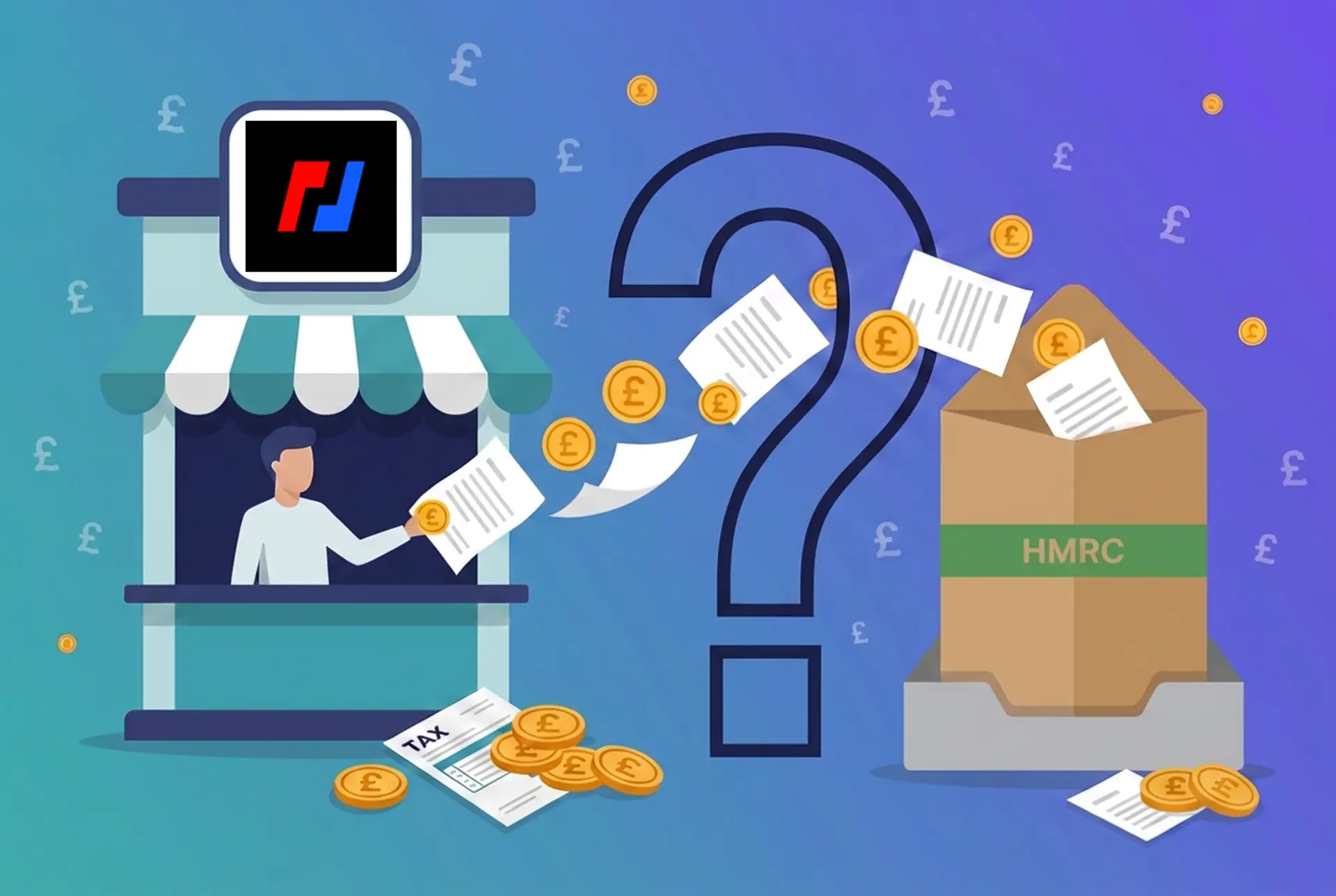
Indirectly, yes, and there is a catch worth knowing first. BitMEX is an offshore exchange built almost entirely around crypto derivatives.
It is not registered with the FCA, it sits on the FCA's warning list, and it is not a UK-based reporting provider, so it does not hand UK customer data to HMRC automatically. But your activity is not invisible.
HMRC has long-standing powers to obtain exchange data, and from 1 January 2026 the Cryptoasset Reporting Framework (CARF) widens international data sharing to cover UK residents using overseas platforms.
The catch: crypto derivatives cannot legally be sold to UK retail customers, and that is the vast majority of what BitMEX offers.
If you have traded on BitMEX and not declared the profits, it is worth getting on top of it now.
This guide covers what HMRC can realistically obtain, where BitMEX stands with UK and overseas regulators, how gains on derivatives are treated, and the steps to take if you owe tax. It reflects HMRC, FCA and OECD positions as of June 2026.
Disclaimer
This guide is intended as a generic informative piece. This is not accounting or tax advice that can be relied upon for any UK individual's specific circumstances. Please speak to a qualified tax advisor about your specific circumstances before acting upon any of the information in this article.
Curious how BitMEX compares with other platforms? Our guide to which crypto exchanges report to HMRC covers 21 exchanges in one place.
Does BitMEX share data with HMRC?
BitMEX is an offshore exchange that has historically operated through Seychelles-based entities, and is not on the FCA's cryptoasset register, so it does not send routine reports on its UK customers to HMRC. There is also no public record of a BitMEX customer-data handover to HMRC of the kind Coinbase made in 2020. On paper, that looks like daylight between BitMEX and the UK tax authority.
The daylight is thinner than it appears. HMRC can require businesses to produce information under Schedule 23 of the Finance Act 2011 and Schedule 36 of the Finance Act 2008, and it has pursued crypto data before. Money also leaves a trail off-platform: to fund a BitMEX account or take profits out, most people move crypto through a UK exchange or a bank at some point, and those are precisely the moments HMRC can see. BitMEX's own history is a reminder that regulators do reach these venues. In 2021 it settled with US authorities for around 100 million dollars over anti-money-laundering failings, and the company later pleaded guilty to a Bank Secrecy Act violation, having run for years without proper identity checks.
So the honest position is that BitMEX is not a UK reporting provider, so it may not be handing your data to HMRC automatically, but your trading still leaves traces, and the reporting net is tightening.
What changes from 1 January 2026: the Cryptoasset Reporting Framework
CARF is the OECD's framework for bringing crypto into the automatic, cross-border information exchange that banks have operated under for years. The UK gave it legal force through The Reporting Cryptoasset Service Providers (Due Diligence and Reporting Requirements) Regulations 2025, effective 1 January 2026. Our explainer on the OECD's CARF release goes into the detail.
The reason it matters for an offshore venue is that CARF is international. A wide group of jurisdictions have agreed to collect crypto data and exchange it with one another. Where an exchange operates in a participating jurisdiction, data it holds on UK-resident users may be passed to HMRC through those exchange arrangements. An offshore base, in other words, is becoming less and less of a blind spot.
What information is reported under CARF?
When a provider is in scope, the data set CARF demands for each UK-resident customer is fixed.
| Identity data | Transaction data |
|---|---|
| Full name | Transaction types (exchanges, transfers, spending) |
| Date of birth | Annual aggregate value |
| Home address | Units and asset type |
| Country of tax residence | - |
| National Insurance / UTR | - |
Each report goes to the provider's local tax authority, which then exchanges it with other CARF members, and that chain is how an overseas platform's data on a UK resident reaches HMRC. Under HMRC's CARF guidance, the rules carry penalties for users and providers alike: a user who deliberately or carelessly fails to provide a valid self-certification can face a penalty of up to £300, while reporting providers face separate penalties for due-diligence, reporting, notification, registration and record-keeping failures.
When does CARF reporting take effect?
| Date | What happens |
|---|---|
| 1 January 2026 | Data collection begins for in-scope exchanges with UK customers. |
| 31 May 2027 | First reports due to HMRC, covering 2026. |
| From 2027 onwards | International CARF data exchange with other countries begins. |
For an overseas provider like BitMEX, whether and when data reaches HMRC depends on its jurisdiction's participation, but the direction of travel is clear: the gaps that once hid overseas activity are closing.
Is BitMEX legal to use in the UK?
This is the part that sets BitMEX apart from most exchanges people ask about, because it is not really a question about BitMEX so much as about its product. The FCA banned the sale of crypto derivatives to UK retail consumers from 6 January 2021, and that ban is still in force. BitMEX is a derivatives exchange. Perpetual contracts, futures and options make up effectively the entire offering, so its core products are not something a UK retail customer can lawfully be sold.
On top of that, BitMEX is not authorised or registered by the FCA and appears on the FCA's warning list of firms believed to be serving UK consumers without permission. If you use it from the UK, you are dealing with a platform that operates outside the UK's regulatory framework and outside UK consumer protections, in products UK retail investors are not meant to be offered. None of that changes your tax obligations. If you made gains, they are still reportable to HMRC, whether or not the venue should have been selling to you in the first place.
How are BitMEX gains taxed in the UK?
BitMEX does not work like a spot exchange, so the tax picture is different from a Coinbase or a Kraken. You are not usually buying and holding coins. You are opening and closing leveraged positions, and the money flows that matter are the realised profit or loss when a position closes and the funding payments that pass between long and short traders on perpetual contracts.
How those flows are taxed is one of the genuinely unsettled corners of UK crypto tax. Depending on the scale, frequency and nature of your trading, profits from crypto derivatives can fall under capital gains tax or be treated as income, and the right answer depends on your specific circumstances. We are not able to tell you which applies to you. This is an area where a qualified accountant earns their fee, and we have linked to our directory below.
What is not in doubt is that the profits are taxable and that you are responsible for declaring them. The practical difficulty is usually reconstructing them: a busy BitMEX account generates a long stream of realised P&L entries, funding credits and debits, deposits and withdrawals, and pulling an accurate position out of that by hand is slow going.
Why has HMRC been sending nudge letters about crypto?
When the data HMRC holds does not square with what someone has declared, it often opens with a nudge letter. It is not an investigation, just a prompt to review your tax affairs and fix anything missing, and it usually mentions that HMRC has information pointing to undeclared crypto.
The scale has grown fast:
| Tax year | Crypto nudge letters |
|---|---|
| 2024/25 | 64,982 |
| 2023/24 | 27,713 |
That near-doubling comes from a freedom of information request by accountancy firm UHY Hacker Young. These campaigns run on data matching, and the data feeding them only grows as CARF comes online. A nudge letter is not an accusation, but it is the wrong thing to ignore: correcting a return voluntarily almost always costs less than waiting for a formal enquiry. Our guide on what to do if you receive an HMRC nudge letter about your crypto runs through the options.
Can HMRC see my BitMEX transactions?
Not by looking inside your account, and not as they happen. HMRC assembles a picture from data: what it can compel through its information powers, the trail your funds leave when they pass through UK banks or UK-registered exchanges, and, as CARF reporting spreads internationally, information shared from abroad. It then checks that against your return. An offshore derivatives venue feels private, but in practice it buys less cover than people expect, and less each year.
What should I do if I have undeclared BitMEX profits?
If you have traded on BitMEX and not declared the profits, the move that protects you is getting ahead of HMRC. A voluntary disclosure is treated far more kindly than something HMRC finds first.
Three steps.
1. Work out what you owe. Pull a full record of your BitMEX wallet history: realised profit and loss on closed positions, funding payments received and paid, and your deposits and withdrawals. From there you work out the taxable position, applying HMRC's rules and taking advice where the capital-versus-income question is unclear. Our comprehensive UK crypto tax guide covers the framework, and any crypto received as income is taxed separately. For a quick estimate on a single disposal, our free crypto tax calculator helps.
2. Tell HMRC. If the relevant tax year is still open, amend your Self Assessment return online; you have until 12 months after the filing deadline, so a return filed by 31 January 2026 can be revised until 31 January 2027. For years that have closed, the Cryptoasset Disclosure Facility is HMRC's purpose-built route, open since November 2023 for unpaid Income Tax or Capital Gains Tax on crypto.
3. Pay what is due. Late tax gathers interest, and a penalty may be added. The penalty is lower when you come forward before HMRC contacts you, so acting early genuinely saves money.
Given the capital-versus-income question around derivatives, this is a strong case for professional help. You can find a Recap-verified UK crypto tax specialist on our directory.
How Recap helps with BitMEX tax
Recap connects to BitMEX and pulls your wallet history into one place, then classifies and values each entry so you get a complete UK tax report. You connect your BitMEX account via API, and Recap reads the realised P&L, funding payments, deposits and withdrawals, values them, and works out your position under HMRC's rules. You can see the setup on our BitMEX integration page.
Connect your BitMEX account to Recap and turn a tangle of derivative entries into clear UK gains and income figures, ready as an HMRC-ready report to file or hand to your accountant.
References
- HMRC and OECD: Cryptoasset Reporting Framework, domestic reporting of UK-resident cryptoasset users
- HMRC: Implementation of the Cryptoasset Reporting Framework (penalties for users and reporting providers)
- The Reporting Cryptoasset Service Providers (Due Diligence and Reporting Requirements) Regulations 2025
- Schedule 23, Finance Act 2011
- Schedule 36, Finance Act 2008
- HMRC Cryptoasset Disclosure Facility
- Nudge-letter statistics: UHY Hacker Young freedom of information request, October 2025
- BitMEX UK regulatory status: FCA warning list entry
- FCA ban on the sale of crypto derivatives to UK retail consumers (PS20/10), in force from 6 January 2021
- BitMEX US enforcement: CFTC / FinCEN settlement (circa $100m, August 2021) and Bank Secrecy Act guilty plea (HDR Global Trading); co-founders Hayes and Delo pleaded guilty (2022)