
Key takeaways
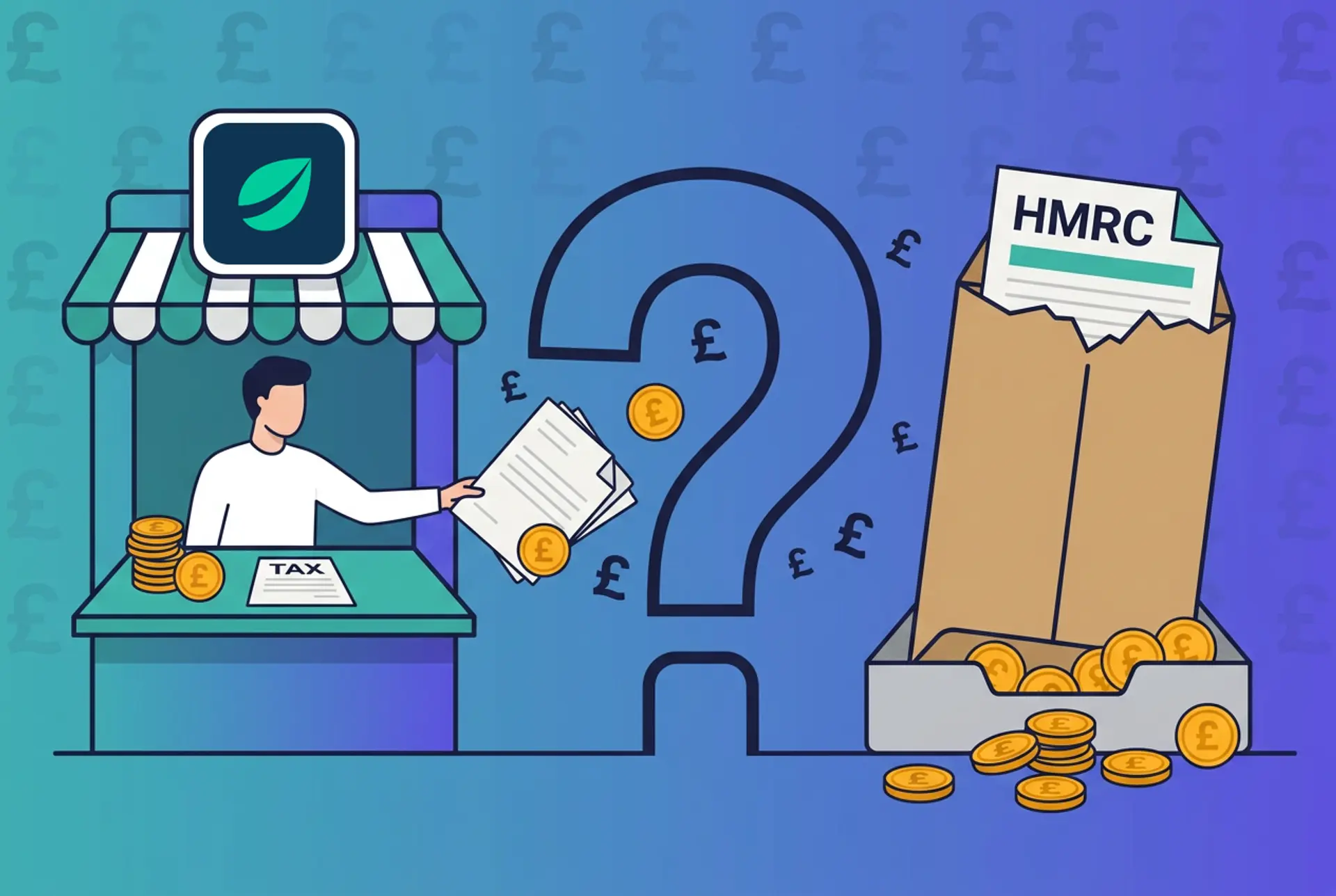
Yes, though indirectly. Bitfinex is an offshore exchange. It is not registered with the FCA, it sits on the FCA's public warning list, and it is not a UK-based reporting provider, so it does not hand UK customer data to HMRC the way a UK-registered exchange does. Do not read that as a free pass.
HMRC has long-standing powers to obtain data from exchanges, and from 1 January 2026 the Cryptoasset Reporting Framework (CARF) widens the net to cover UK residents using overseas platforms through international exchange of information.
If you have traded on Bitfinex and not declared your gains or income, the sensible move is to sort it out now rather than wait and see.
This guide explains what HMRC can realistically get hold of, where Bitfinex stands with UK regulators, why Bitfinex activity is unusually easy to misreport, and the steps to take if you owe tax. It reflects HMRC, FCA and OECD positions as of June 2026.
Disclaimer
This guide is intended as a generic informative piece. This is not accounting or tax advice that can be relied upon for any UK individual's specific circumstances. Please speak to a qualified tax advisor about your specific circumstances before acting upon any of the information in this article.
For the wider picture, our guide to which crypto exchanges report to HMRC puts Bitfinex alongside the other offshore venues and the UK-registered exchanges.
Does Bitfinex share data with HMRC?
Bitfinex is not a UK company and is not on the FCA's cryptoasset register, so it does not file routine reports on its UK customers to HMRC. There is also no public record of Bitfinex handing over a UK customer list, as Coinbase did in 2020. On the face of it, that sounds like distance between Bitfinex and the taxman.
In practice the distance is smaller than it looks. HMRC can compel businesses to disclose information under Schedule 23 of the Finance Act 2011 and Schedule 36 of the Finance Act 2008, and it has a history of going after crypto exchange data. Just as importantly, very few Bitfinex users operate entirely within Bitfinex. Funds usually pass through a UK bank or another exchange at some point, and those on-ramps and off-ramps are exactly where HMRC can pick up the thread.
So the honest answer is that Bitfinex itself may not be reporting you today, but your Bitfinex activity is not invisible, and it is about to get a good deal more visible.
What changes from 1 January 2026: the Cryptoasset Reporting Framework
Step back from Bitfinex for a moment. The Cryptoasset Reporting Framework is a global standard, drawn up by the OECD, that wires national tax authorities into a shared flow of crypto data. The UK turned it into law with The Reporting Cryptoasset Service Providers (Due Diligence and Reporting Requirements) Regulations 2025, in force from 1 January 2026. Our explainer on the OECD's CARF release covers the framework in full.
Here is the part that matters for an offshore exchange. CARF is not just a UK rule, it is an international one, and a large group of countries have signed up to exchange data with each other. Where an exchange operates in a participating jurisdiction, the data it collects on UK-resident users may be passed to HMRC through international exchange arrangements. So even an exchange that is not UK-based can end up feeding HMRC, provided its home jurisdiction is part of the framework. CARF is the crypto version of the system that already shares offshore bank-account data across more than 100 countries.
The upshot for Bitfinex users is simple enough: the assumption that an overseas exchange is invisible to HMRC has a shelf life, and that shelf life runs out as CARF beds in.
What information is reported under CARF?
Where a provider is in scope, CARF requires a defined set of details for each UK-resident customer.
| Identity data | Transaction data |
|---|---|
| Full name | Transaction types (exchanges, transfers, spending) |
| Date of birth | Annual aggregate value |
| Home address | Units and asset type |
| Country of tax residence | - |
| National Insurance / UTR | - |
Reports go to the relevant tax authority and are then exchanged between CARF countries, which is how data on a UK resident using an overseas platform can reach HMRC. Under HMRC's CARF guidance, the rules carry penalties for users and providers alike: a user who deliberately or carelessly fails to provide a valid self-certification can face a penalty of up to £300, while reporting providers face separate penalties for due-diligence, reporting, notification, registration and record-keeping failures.
Is Bitfinex legal and regulated in the UK?
This is where Bitfinex looks very different from a Coinbase or a Kraken. Bitfinex is not authorised or registered by the FCA, and it appears on the FCA's warning list of firms believed to be promoting financial services to UK consumers without permission. A warning-list entry is the FCA flagging a firm to the public, not a sign of UK oversight.
From a UK perspective Bitfinex is an unregulated platform, with the limited consumer protections that implies. Bitfinex has also restricted UK retail access directly: since 10 January 2024 it has blocked new deposits and exchange orders for restricted UK retail customers, and from 14 February 2024 it disabled Staking, Lending Pro, Funding, Borrow and Securities for them. Only certified high-net-worth or professional investors under FPO exemptions retain full access, so for UK retail readers, funding-wallet and lending income is typically historic activity. This sits alongside the FCA's retail ban on crypto derivatives, which remains in place, although the FCA reopened retail access to crypto exchange-traded notes from 8 October 2025. None of this changes your tax position. Whether or not an exchange is regulated here, you are responsible for declaring your gains and income to HMRC, and an offshore venue outside UK regulation does not put your activity beyond reach.
Why has HMRC been sending nudge letters about crypto?
A nudge letter is HMRC's opening move when its data suggests you have not declared something. It is not a formal investigation, just a prompt to check your return and correct anything missing, usually noting that HMRC holds information pointing to undeclared crypto.
The volumes have climbed sharply:
| Tax year | Crypto nudge letters |
|---|---|
| 2024/25 | 64,982 |
| 2023/24 | 27,713 |
That is more than double the year before. The figures come from a freedom of information request by accountancy firm UHY Hacker Young. HMRC builds these campaigns from whatever data it holds, and that pool widens every time a new data source comes online. Treat a nudge letter as a prompt to act, not as something to ignore: correcting your return voluntarily almost always costs less than waiting for HMRC to open an enquiry. Our guide on what to do if you receive an HMRC nudge letter about your crypto covers the steps.
Can HMRC see my Bitfinex transactions?
Not by watching your account, and not in real time. HMRC builds its picture from data: information it can demand under its statutory powers, the trail left where your funds touch UK banks or UK-registered exchanges, and, as CARF reporting spreads internationally, data passed on from overseas. It then sets all of that against what you declared. The practical takeaway is that an offshore exchange buys less privacy than people assume, and steadily less over time.
Why Bitfinex activity is easy to misreport
Bitfinex is built for active and professional traders, and its structure produces tax events that casual record-keeping tends to miss. The platform splits your funds across three separate wallets, and that split is at the root of most of the confusion.
- The funding wallet. Bitfinex runs a peer-to-peer funding market where you lend crypto or fiat to margin traders and earn funding payments in return. Those payments are generally treated as income, received in a steady drip, and they are one of the most commonly overlooked items on the whole platform.
- The margin wallet. Margin positions, settlements and swaps generate gains and losses that behave very differently from a simple buy and hold, and they need careful treatment.
- The exchange wallet. Ordinary spot trades, where you sell or swap one asset for another, are disposals for capital gains even when no pounds are involved.
- Staking and transfers. Staking rewards are income at the value you receive them, and transfers between your own wallets, including the moves between your three Bitfinex wallets, need matching so they are not misread as disposals.
On top of that, Bitfinex exports its history as a ledger, with funding payments, settlements, swaps, trades and transfers all interleaved as line items. Reconstructing an accurate tax position from that by hand is genuinely hard, and it is a common reason Bitfinex users end up with figures that do not accurately reflect their actual activity.
What should I do if I have undeclared Bitfinex gains?
If you have traded on Bitfinex and not declared your gains or income, getting ahead of HMRC is what protects you. A voluntary disclosure is treated far more gently than something HMRC uncovers on its own.
Three steps.
1. Work out what you owe. Pull together a full record of your Bitfinex activity across all three wallets: spot trades, margin positions, funding payments received, staking rewards, and your deposits and withdrawals. Run it through HMRC's share-pooling rules, which our comprehensive UK crypto tax guide explains, and treat funding payments and staking rewards as income from crypto. For a fast estimate on a single disposal, our free crypto tax calculator does the sums.
2. Tell HMRC. Where a tax year is still open, you amend your Self Assessment return online, and that window stays open for 12 months after the filing deadline, so a return filed by 31 January 2026 remains editable until 31 January 2027. After it shuts, the dedicated channel is the Cryptoasset Disclosure Facility, which HMRC opened in November 2023 for unpaid Income Tax or Capital Gains Tax on crypto.
3. Pay what is due. Interest runs on late tax, and a penalty is common on top. The penalty is lower when you come forward before HMRC contacts you, so there is a real saving in acting early.
Your specific position is a question for a qualified accountant, who can run the disclosure and keep your exposure as low as possible. Our directory lets you find a Recap-verified UK crypto tax specialist.
One pattern we see often with Bitfinex: traders who track their spot buys and sells carefully but never account for months of funding payments quietly accruing in the funding wallet. That lending income is taxable just like any other, and it is exactly the sort of thing HMRC's widening data picture is designed to catch.
How Recap helps with Bitfinex tax
Recap connects to Bitfinex and brings your whole history into one place, then classifies and values every entry so you get a complete UK tax report. You can connect your Bitfinex account via API, or import your Bitfinex ledger and trades CSV exports if you prefer. Recap reads across all three wallets, from spot trades and transfers to margin activity, funding payments and staking rewards, and works out your gains and income under HMRC's rules. You can see the full setup on our Bitfinex integration page.
Connect your Bitfinex account to Recap and let it reconcile all three wallets into one set of UK gains and income figures, packaged as an HMRC-ready report to file or pass to your accountant.
References
- HMRC and OECD: Cryptoasset Reporting Framework, domestic reporting of UK-resident cryptoasset users
- HMRC: Implementation of the Cryptoasset Reporting Framework (penalties for users and reporting providers)
- The Reporting Cryptoasset Service Providers (Due Diligence and Reporting Requirements) Regulations 2025
- Schedule 23, Finance Act 2011
- Schedule 36, Finance Act 2008
- HMRC Cryptoasset Disclosure Facility
- Nudge-letter statistics: UHY Hacker Young freedom of information request, October 2025
- Bitfinex UK regulatory status: FCA warning list entry