
For UK crypto investors, keeping track of your cryptocurrency trades and transactions is essential for complying with HMRC regulations. Whether you're a long-term HODLer, an active trader, or participate in DeFi activities, understanding how to record your crypto activity can simplify and speed up your tax filing.
This article will walk you through the key record-keeping requirements from HMRC, provide tips on maintaining accurate records, and offer advice on handling missing data.
Why is record keeping important for crypto investors?
HMRC is clear about the importance of keeping comprehensive records for all activity - whether crypto or traditional finance. Within the crypto space, proper record-keeping helps you prove your acquisition costs, calculate gains or losses, and demonstrates compliance with tax law. Without good records, you could face challenges during a tax investigation or when filing your tax return.
HMRC’s record keeping requirements for cryptocurrency transactions
According to HMRC's guidelines, it's your responsibility to keep track of your crypto transactions - exchanges are not required to retain records indefinitely.
Records must include:
- Type of cryptoasset: Identify the specific digital assets involved in each transaction (e.g. Bitcoin, Ethereum).
- Date of transaction: Record the exact date of the trade or transaction.
- Buy or sell: Note whether you bought or sold the crypto asset.
- Amount units: Include the number of units of the crypto asset involved.
- Value in pounds sterling: The transaction value in GBP as of the date of the transaction.
- Cumulative total of units held: Total holdings of each cryptocurrency.
- Bank statements and wallet addresses: These can be useful if you need to verify transactions or provide evidence during a tax review.
Records of cryptoassets can be:
- Paper or hardware (cold) wallets containing your public and private keys.
- Electronic (hot) wallets on devices.
- Other records of their transactions and balances such as downloads of their wallet activity from a cryptoassets exchange
How to track your crypto transactions: best practices
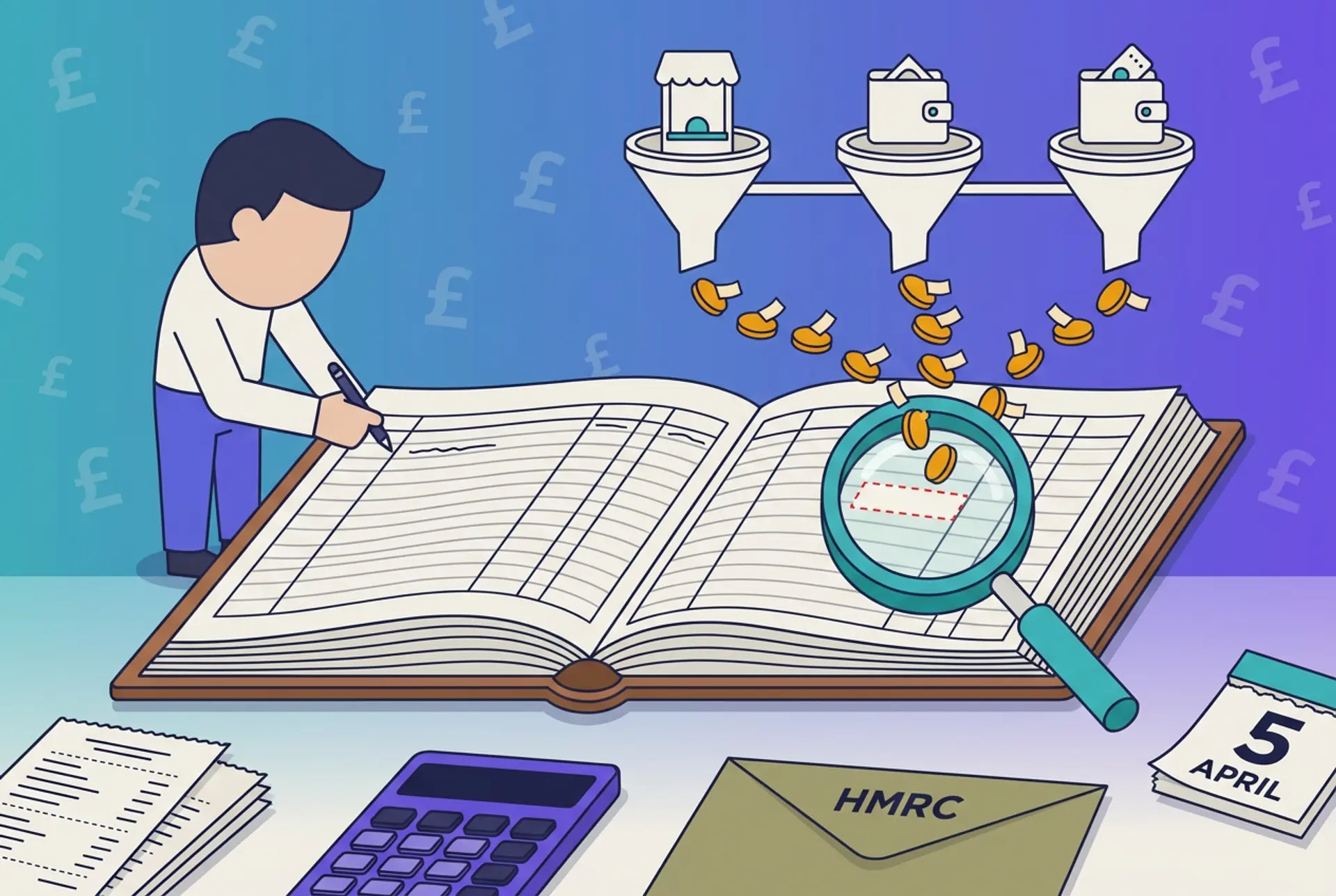
Maintaining accurate records involves more than just tracking your crypto trades. Here are some best practices for organising your records:
Export data regularly
Although new regulations like the Crypto Asset Reporting Framework (CARF) are putting more pressure on crypto asset service providers, there is still a long way to go in data consistency. There is a vast difference in the quality of record keeping by crypto exchanges, and HMRC places the onus on the individual to keep adequate records, so you cannot rely on the exchange for this.
To avoid losing access to important records, it is good practice to regularly export transaction data from the platforms you use. This includes transaction history, deposit/withdrawal logs, and balance statements.
Recap ensures all transaction data is backed up
In Recap you can import data by connecting to an exchange via API. If the account becomes disconnected, for example if the exchange closes down, all data up to that point is safe (provided you don't delete the account in Recap) and is still included in your records and tax calculations.
Keep data even after filing your tax return
It’s important to retain your records even after submitting your tax return. HMRC may conduct audits, and having detailed records can help you respond to queries, calculate pool values in future tax returns, and adapt to any changes in tax guidance.
Use a crypto tax calculator or app
Using a tool like Recap makes tracking your crypto activity easy. Our app automatically records transactions from exchanges and wallets, applies fair market values and calculates your capital gains or losses.
Handling missing crypto data: what to do if you can't find records
Missing data is a common issue for crypto investors, especially when exchanges close or transaction history becomes inaccessible. You can try to reconstruct missing records by:
- Reviewing old bank statements for fiat deposits or withdrawals you may have made into or out of old accounts
- Check through historical data in accessible accounts to see if you can track any movement of assets
- Reaching out to customer support at exchanges you no longer use to request any data that they may have.
- Use a blockchain explorer to search for transactions associated with a wallet address.
Missing data in Recap
Recap intuitively flags when data might be missing and allows you to manually input and edit transactions to ensure your transaction history is accurate.
Sometimes missing data is simply untraceable and can only be identified as such. HMRC understands that some data may be unattainable and accepts reasonable estimates if original records are lost, but you must clearly state them on your tax return. Ensure you are transparent about missing data, otherwise it could be seen that you are withholding information and raise concerns of fraud, instigating an investigation or audit.
How Recap makes record keeping easy for crypto investors
At Recap, we understand the challenges crypto investors face when it comes to record keeping. Our crypto tax calculator tool is designed to make it easy for you to track, report, and file your taxes:
- Automatic data import: Import your transaction data in real-time from supported exchanges and wallets and by CSV for all others. Take a look through our integrations page to explore.
- Fair market valuations: Automated valuations from consistent pricing providers that are carefully matched to your exchanges.
- Data reconciliation: Check your data is correct within our detailed activity screen and easily edit to correct issues. Our software also flags where data might be missing, e.g. a disposal that cannot be matched with an original acquisition for the asset might remind you to add a forgotten wallet.
- Accurate capital gains calculations: For all of your transactions in each tax year. View a detailed breakdown of the CGT calculation including the application of HMRC matching and section 104 pooling rules for every transaction.
- Private record-keeping: End-to-end encryption ensures your data is secure and for your eyes only.
Stay prepared for HMRC compliance with proper record keeping
Good record keeping is essential for tax compliance and makes filing your crypto taxes easier. By following HMRC’s guidance and using crypto accounting tools like Recap, you can stay organised and prepared for tax season all year round.
Disclaimer
This guide is intended as a generic informative piece. This is not accounting or tax advice that can be relied upon for any UK individual’s specific circumstances. Please speak to a qualified tax advisor about your specific circumstances before acting upon any of the information in this article.