
US crypto cost basis methods explained: FIFO, LIFO, specific ID & the new per-wallet rules
Understanding your crypto cost basis is essential for accurately reporting your US taxes. The IRS requires you to calculate the gain or loss on every disposal of cryptocurrency — and the method you use to determine your cost basis can significantly impact how much tax you owe.
In 2025, the IRS introduced major changes to how cost basis must be tracked, shifting from a universal approach to wallet-by-wallet tracking. This guide explains each cost basis method, the new per-wallet rules, and what they mean for your crypto tax strategy.
What is crypto cost basis?
Cost basis is the original value of a crypto asset for tax purposes, typically the purchase price plus any associated fees (such as exchange or network fees). When you dispose of a crypto asset — by selling, trading, spending, or gifting it — your taxable gain or loss is calculated as:
Capital gain (or loss) = Disposal proceeds – Cost basis
If you bought 1 ETH for $2,000 and later sold it for $3,500, your cost basis is $2,000 and your capital gain is $1,500.
Why does the cost basis method matter?
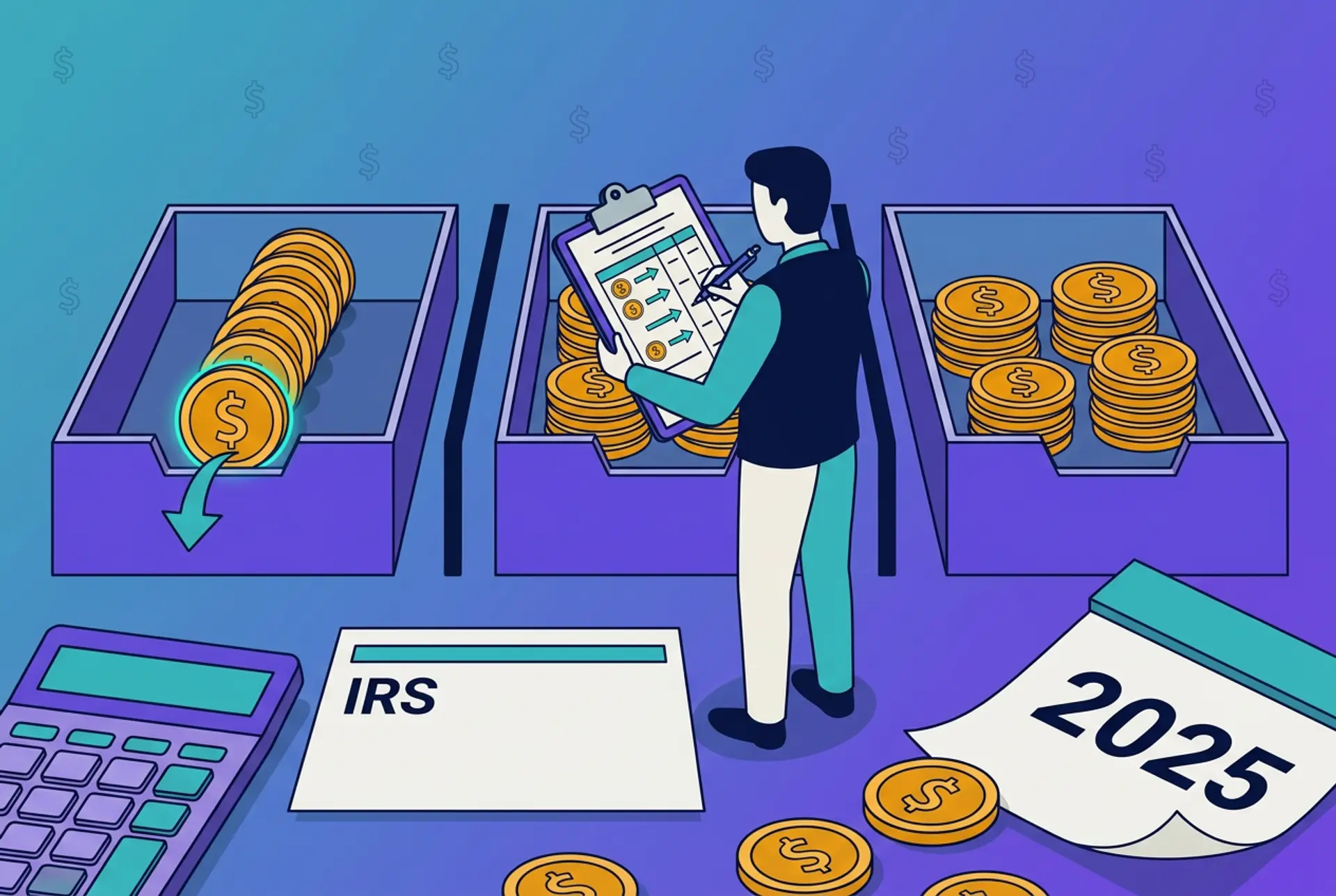
Most crypto investors buy the same asset multiple times at different prices. When you sell, you need to determine which purchase (or "lot") you're selling from. The method you choose determines which lot is matched to the sale — and therefore the size of your taxable gain or loss.
Accepted cost basis methods in the US
The IRS permits the following methods for digital assets. As of January 1, 2025, each method must be applied on a per-wallet or per-account basis (more on this below).
First-In, First-Out (FIFO)
FIFO is the IRS default method. It assumes the oldest units you purchased are sold first.
Example: You bought 1 BTC at $20,000 in January and 1 BTC at $40,000 in June. If you sell 1 BTC in December for $50,000, FIFO matches the sale against the January purchase, giving you a $30,000 gain.
FIFO tends to produce larger gains in a rising market because your oldest (and usually cheapest) lots are sold first. However, it can also mean gains qualify as long-term (held over one year), which are taxed at lower rates of 0%, 15%, or 20%.
Last-In, First-Out (LIFO)
LIFO assumes the most recently purchased units are sold first. It is available as a form of specific identification.
Example: Using the same scenario above, LIFO matches the sale against the June purchase ($40,000), resulting in a $10,000 gain instead of $30,000.
LIFO can reduce your taxable gain in a rising market, but the gains are more likely to be short-term (held under one year), which are taxed at your ordinary income tax rate — potentially up to 37%.
Specific Identification
Specific identification gives you the most control. You choose exactly which lot (purchase) to match against each sale, as long as you can adequately identify the units at the time of the transaction.
This includes strategies like:
- Highest-In, First-Out (HIFO): Sell the lots with the highest cost basis first, minimizing your gain.
- Lowest-In, First-Out (LIFO): Sell the lots with the lowest cost basis first (less common, but sometimes used to realize gains strategically).
- Optimized selection: Choose lots based on whether you want short-term or long-term treatment.
Important: Specific identification requires meticulous record-keeping. You must be able to prove which specific units were sold, including acquisition date, cost, and the wallet or account they were held in.
The new per-wallet cost basis rules (2025 onwards)
What changed?
Starting January 1, 2025, the IRS requires taxpayers to track cost basis for digital assets on a wallet-by-wallet and account-by-account basis. This was established in the 2024 final regulations under § 1.1012-1(j).
Previously, many investors used a "universal wallet" approach — treating all holdings of the same crypto across every exchange, wallet, and cold storage device as a single pool. This allowed investors to cherry-pick the most tax-efficient lots regardless of where the assets were actually held.
That is no longer allowed.
How do the per-wallet rules work?
Under the new rules:
- Each exchange account, self-hosted wallet, and cold storage device is treated as a separate ledger for cost basis purposes.
- When you sell crypto from a specific wallet or exchange, you must use the cost basis of units held in that same wallet or account.
- You cannot use a cost basis from a different wallet or account, even if you hold the same asset there.
- FIFO, LIFO, and specific identification all apply within each wallet — not across wallets.
What counts as a "wallet" or "account"?
The IRS has not provided a precise definition of what constitutes a "wallet" for these purposes, and some ambiguity remains. Generally:
- Each centralized exchange account (e.g., your Coinbase account, your Kraken account) is treated as a separate account.
- Each self-hosted wallet (e.g., a MetaMask wallet, a Ledger device) is treated as a separate wallet.
- Sub-accounts within a single exchange may be treated as part of the same account, but this area is not fully clarified.
HD wallets and derivation addresses
A common question is whether a hierarchical deterministic (HD) wallet — which generates multiple addresses from a single seed phrase — counts as one wallet or many. The IRS has not explicitly addressed this, but the prevailing interpretation among tax professionals is that all addresses derived from the same seed phrase constitute a single wallet for cost basis purposes, since they are controlled by the same private key infrastructure.
However, if you use separate seed phrases for different wallets on the same hardware device (e.g., multiple accounts on a Ledger), each would be treated as a separate wallet.
This is an area where guidance may evolve, so maintaining detailed records of your wallet structure is essential.
What happens when you transfer between your own wallets?
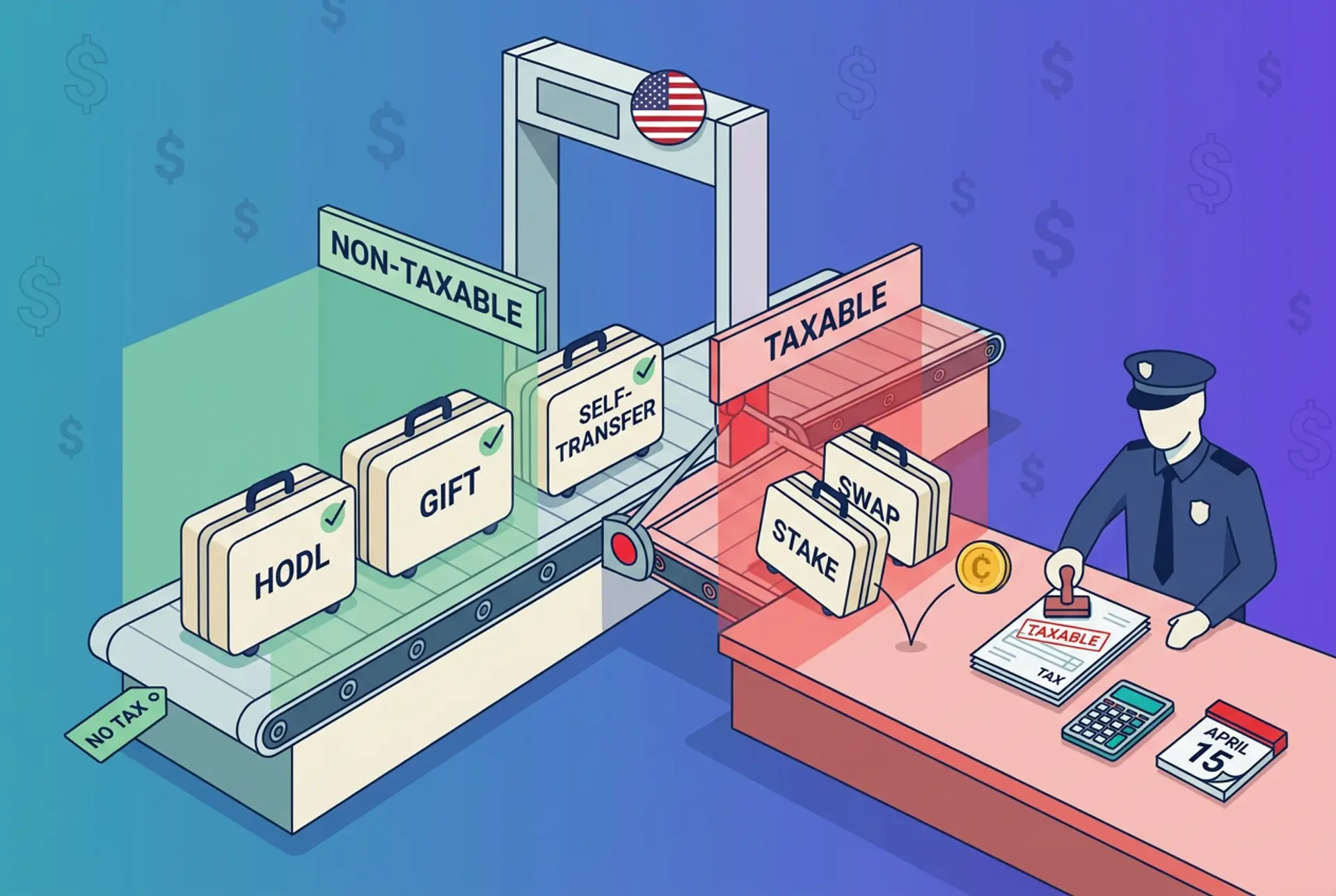
Transferring crypto between wallets you own is not a taxable event. The cost basis of the transferred units carries over to the receiving wallet. However, you must carefully track these transfers to maintain cost basis continuity.
Failing to document wallet-to-wallet transfers can create gaps in your records. If the IRS cannot verify your cost basis, they may treat the sale as having zero cost basis — meaning the entire proceeds become taxable gain.
Practical tip: Always record the date, amount, and cost basis of assets when transferring between wallets. Crypto tax software like Recap can help automate this tracking.
Moving assets between wallets before selling
Some investors previously moved assets to a specific wallet before selling to take advantage of more favorable cost basis lots. Under the new per-wallet rules, while the cost basis travels with the asset, the transfer must be documented and genuine. The IRS is focused on preventing the kind of cherry-picking that the universal method allowed.
If you transfer an asset to a different wallet and then immediately sell it, the cost basis from the original wallet carries over. But you must be able to prove the full chain of custody.
Revenue Procedure 2024-28: The transition safe harbor
To help taxpayers transition from universal to per-wallet tracking, the IRS issued Revenue Procedure 2024-28. This provided a one-time safe harbor allowing taxpayers to reallocate unused cost basis across their wallets as of January 1, 2025.
Key details:
- The safe harbor applied only to capital assets (not assets held as inventory or business property).
- Taxpayers had to complete the reallocation by the earlier of their first disposal after January 1, 2025, or the due date of their 2025 tax return.
- The reallocation had to be reasonable — you could not assign all your highest-cost lots to wallets you planned to sell from.
- This was described as a "once in a lifetime opportunity" to optimize your basis allocation.
If you missed the safe harbor
If you did not take advantage of Rev. Proc. 2024-28, you are now locked into whatever basis allocation existed in your wallets at the start of 2025. You cannot retroactively reallocate basis from one wallet to another.
Going forward, the only way basis moves between wallets is through actual transfers of assets, with the basis carrying over as described above.
Penalties for non-compliance
The IRS takes cost basis reporting seriously. If you cannot substantiate your wallet-by-wallet basis:
- The IRS may disregard your claimed basis entirely and treat the sale as having zero cost basis.
- Accuracy-related penalties of 20% may apply for negligence or substantial understatement of income.
- In extreme cases, fraud penalties of up to 75% and potential criminal exposure are possible.
Form 1099-DA: New broker reporting
The IRS introduced Form 1099-DA for digital asset reporting:
- 2025 transactions: Brokers must report gross proceeds only. Cost basis reporting is optional.
- 2026 transactions onwards: Brokers must report both gross proceeds and adjusted basis for "covered" digital assets — those acquired and held within the same broker account.
This means that for assets held across multiple platforms or in self-hosted wallets, the responsibility for accurate cost basis tracking remains firmly with the taxpayer.
How to track your crypto cost basis with Recap
Manually tracking cost basis across multiple wallets and exchanges is complex and error-prone. Recap automates this process:
- Connect your wallets and exchanges — Use API connections, wallet addresses, or CSV imports to sync all your transaction data.
- Automatic per-wallet tracking — Recap applies the IRS-required wallet-by-wallet cost basis methodology automatically.
- Choose your method — Select FIFO, LIFO, or specific identification and Recap calculates your gains and losses accordingly.
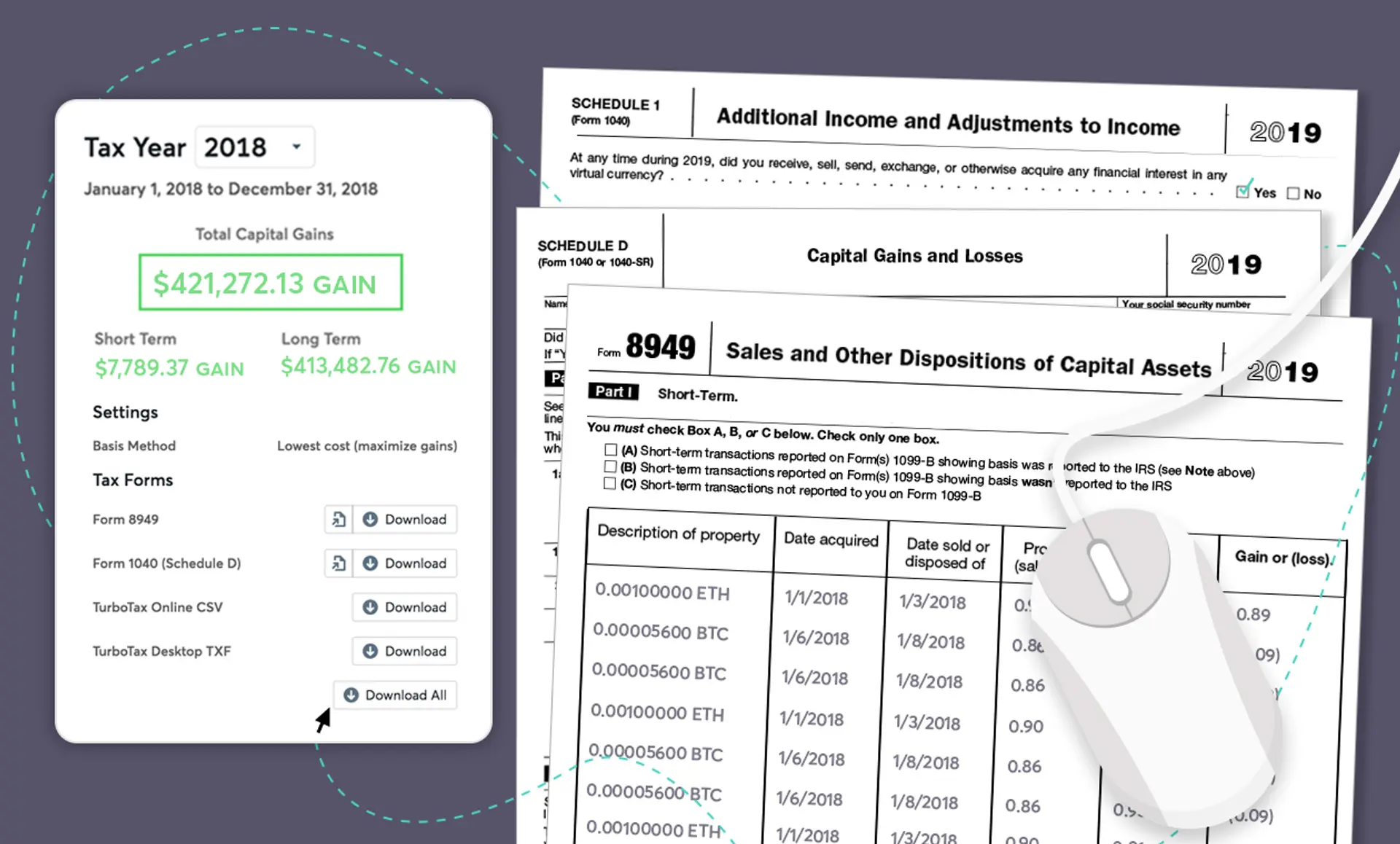
- Generate tax reports — Download IRS-ready reports including Form 8949 data for your tax return.